“Powerful” registrant survey findings
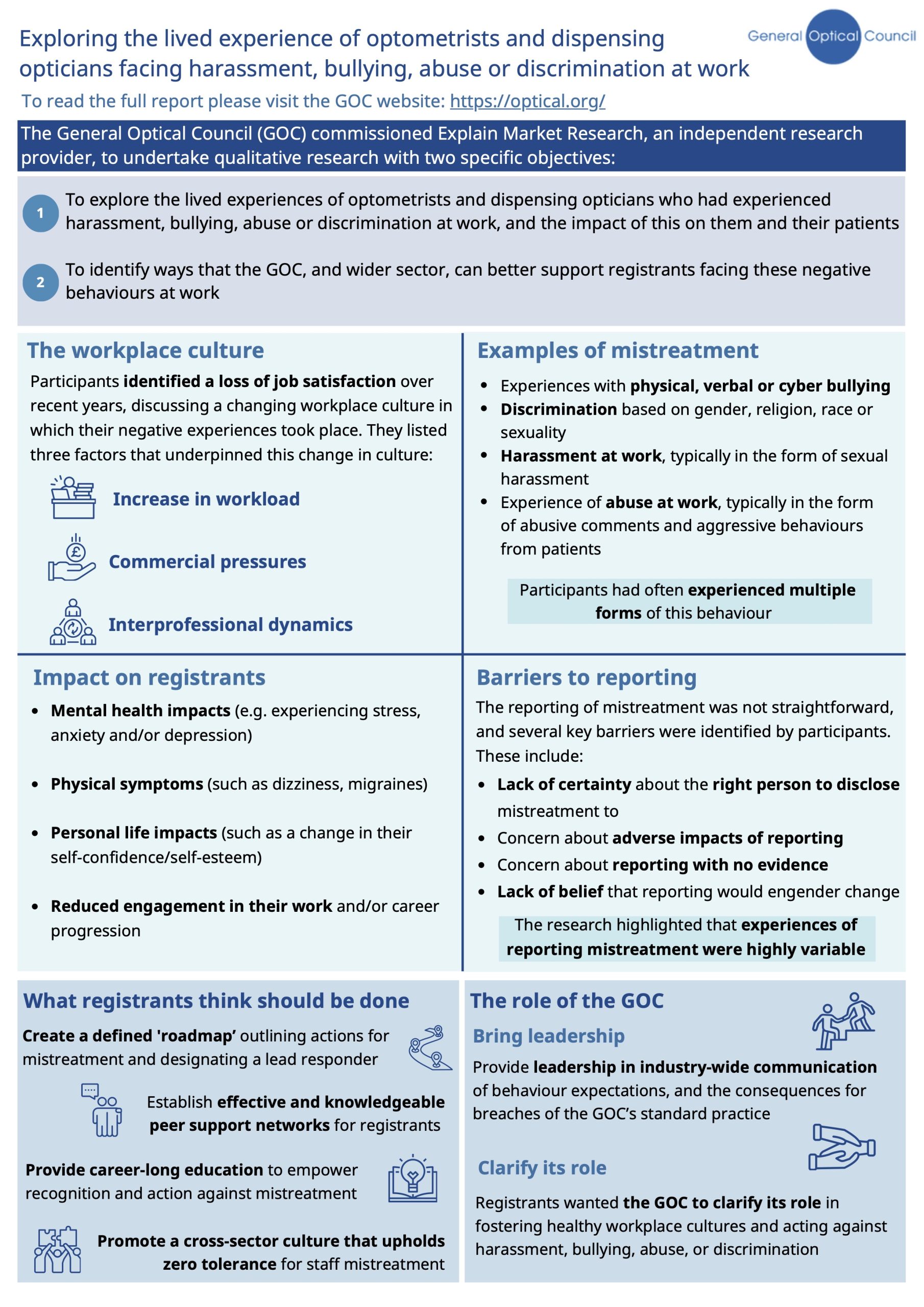
Snapshot of findings
The General Optical Council (GOC) has published new research exploring the lived experiences of registrants who have experienced harassment, bullying, abuse or discrimination at work, and the impact this has on them and their ability to provide safe patient care.
The qualitative research, carried out by Explain Market Research, includes 38 in-depth interviews with optometrists and dispensing opticians (DOs). All had experience of harassment, bullying, abuse or discrimination at work – either as a single issue or had experienced multiple issues.
It was commissioned following the findings from recent GOC registrant surveys, which highlighted a high incidence of bullying, harassment, abuse and discrimination in the optical workplace.
Interview participants identified a loss of job satisfaction over recent years due to an increase in workload, commercial pressures and inter-professional dynamics, according to the report. Participants discussed experiences with physical, verbal or cyber bullying; discrimination based on gender, religion, race or sexuality; harassment at work, typically in the form of sexual harassment; and abusive comments and aggressive behaviours from patients.
Participants also discussed the impacts of experiencing mistreatment at work relating to harassment, bullying, abuse or discrimination – and carrying this with them throughout their career. Also according to the report, some participants felt that patient care may have been indirectly impacted as a result of their mistreatment, for example, in providing less personal or ‘caring’ care.
Several barriers were identified to disclosing negative experiences, including: not being able to find the right person to raise concerns to; worry about adverse impacts of reporting, such as threatening their reputation or career prospect; concern about reporting behaviour with no evidence; and low faith in change.
Participants also discussed how they thought bullying, harassment, abuse and discrimination could be effectively addressed in the workplace. Suggestions included:
- A roadmap of what to do if they experience these behaviours
- An established leader within this roadmap to address concerns
- Peer support
- Career-long education regarding how to recognise and act upon mistreatment
- Leadership from the GOC to provide industry wide communication of both expectations of appropriate behaviour and consequences if these expectations are breached
Steve Brooker, GOC director of regulatory strategy, said: “This powerful report reveals the devastating personal impacts of bullying, harassment, abuse and discrimination in the workplace. It also demonstrates the potential patient safety consequences of these behaviours, which gives the GOC a clear public protection mandate to act.
“In 2023, along with professional and membership bodies, we issued a joint statement committing to a zero-tolerance approach to bullying, harassment, abuse and discrimination across all working environments, in response to findings in our workforce survey. We have since strengthened our standards of practice to help promote more inclusive workplace environments and ensure businesses support those who have faced these negative behaviours.
“We are committed to using our regulatory levers to tackle negative workplace culture, but making real change requires a sector wide effort. It’s in everyone’s interests to address these issues, since otherwise optical careers will become less attractive and professionals will end their optical careers early. I’m grateful to everyone that took part for having the courage to share their experiences and shine a spotlight on this difficult topic.”
In the interviews, participants called on the GOC to clarify how it would respond if its standards of practice were breached.
The following statement from the GOC is intended to help registrants and stakeholders understand its approach to fitness to practise work in such cases: “Whilst we recognise that most workplace concerns are best dealt with at a local level, we may investigate more serious cases of harassment, bullying, abuse and discrimination. Each case is assessed on its own merits, taking into account the seriousness of the concerns and whether there is sufficient evidence, or a clear indication that evidence is available, to support the allegations. Where cases do not meet our acceptance criteria for a formal investigation, we may provide informal advice to the registrant reminding them of the standards they are expected to maintain. We also keep a record of such concerns so that, should similar issues be raised in the future, we can review them in context. Discrimination undermines public confidence in the profession and has the potential to pose a serious risk to patient safety. A more serious sanction is likely to be appropriate where a case involves direct or indirect discrimination against patients, colleagues or other people who share protected characteristics either within or outside their professional life.”
See the research report for the detailed findings.