Dry Eye Corner Part 6
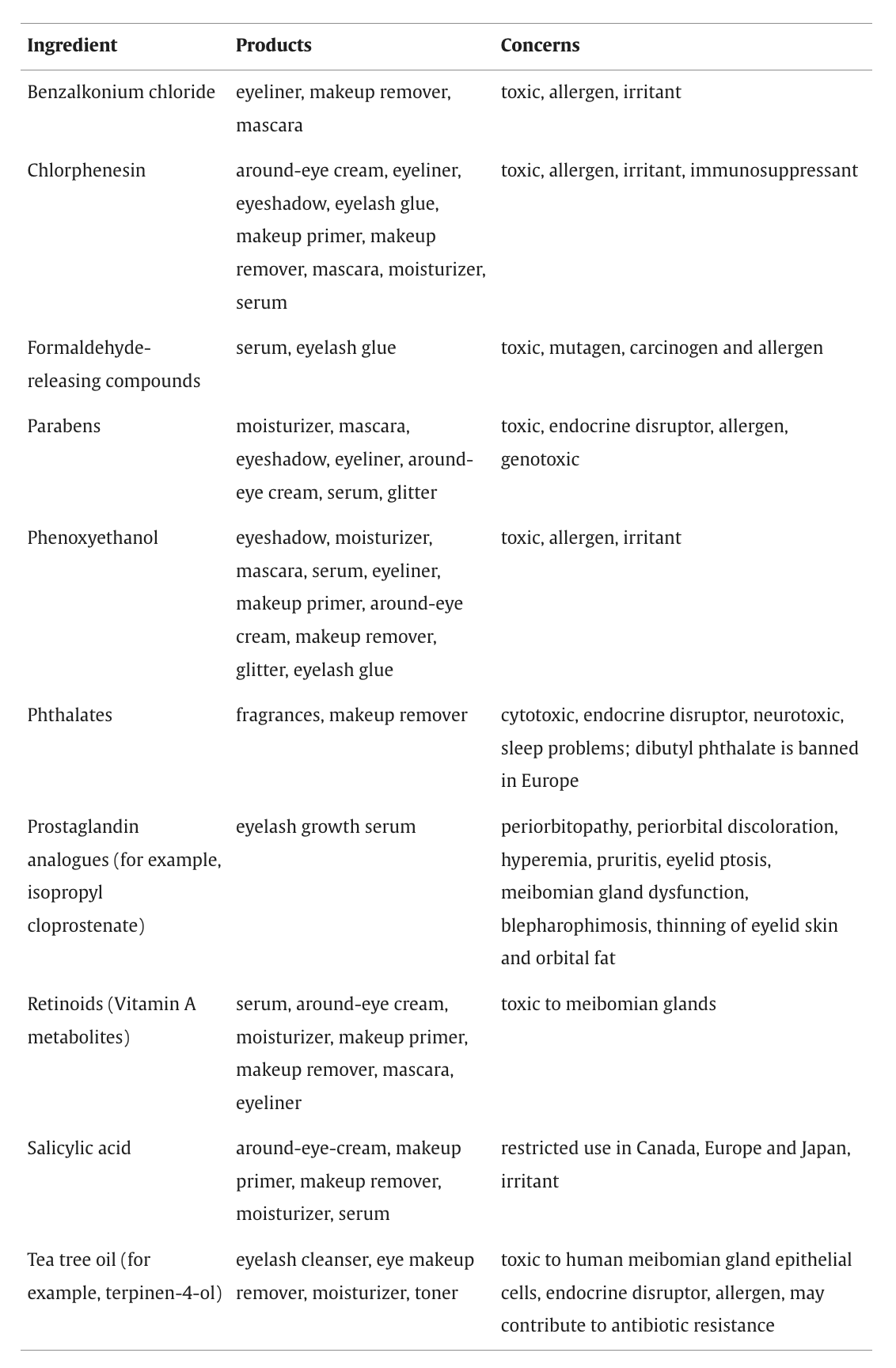
Ten eye make-up ingredients that risk significant adverse effects on the ocular surface and/or adnexa (courtesy of the TFOS Lifestyle Report Executive Summary: A Lifestyle Epidemic – Ocular Surface)
One of my young orthokeratology patients asked me recently about the use of prostaglandin analogues in eyelash serums. Never in a month of Sundays would I have expected to be a 16-year-old’s port of call for make-up advice.
Firstly, fair play to her; after getting mixed messages from social media, she had the confidence to ask my advice.
Link that with recent research from Aston University1, which found that 56 per cent of 18 to 25-year-olds in the study population had dry eye disease, 90 per cent had at least one symptom and around half had lost 25 per cent of their meibomian glands – it’s clear that dry eye problems are no longer limited to our older patients. In my opinion, this makes our understanding of eye cosmetics fundamental.
Understanding the eye health risks
Cosmetic ingredients play a crucial role in modern beauty and personal care products. From enhancing appearance to protecting the skin and eyes, these substances perform a wide range of functions. However, growing scientific research has revealed that some commonly-used ingredients may also pose health risks. Understanding both the benefits and potential hazards of these ingredients is essential for informed consumer choices.
I have used the Tear Film and Ocular Surface Society (TFOS) Lifestyle: Impact of cosmetics on the ocular surface report2 as my main source of information for this article, as it has more than 900 references and forms part of the TFOS Lifestyle Report Executive Summary: A Lifestyle Epidemic – Ocular Surface Disease3.
The eyelid is composed of the thinnest layer of skin of anywhere in the body4 and this makes it prone to allergic contact dermatitis, irritation and easy absorption of toxic chemicals.
Cosmetic formulations are complex blends of chemicals designed to achieve specific purposes. Ingredients in products such as mascaras, eyeliners, eye creams and make-up removers can act as abrasives, absorbents, antimicrobials, antioxidants, colourants, emulsifiers, humectants and preservatives.
For example, emulsifiers help mix oil and water components, while film-formers create a smooth coating on the skin or eyelashes. Humectants retain moisture, and preservatives prevent microbial growth, ensuring the stability and shelf life of products. These versatile roles make cosmetic ingredients essential for both product performance and safety.
Despite their benefits, concerns arise because a large number of chemicals used in cosmetics have not undergone thorough safety evaluation. Studies suggest that thousands of compounds are used in cosmetic formulations, yet only a fraction have been rigorously reviewed. This raises questions about long-term exposure and cumulative effects on human health.
Preservatives commonly found in cosmetics
Preservatives are among the most important – and debated – cosmetic ingredients. They prevent contamination by bacteria, fungi and mould, particularly in products applied near sensitive areas such as the eyes.
Common preservatives include benzalkonium chloride (BAK), formaldehyde-releasing compounds, parabens, phenoxyethanol and chlorphenesin. While effective, many of these substances have been linked to irritation and toxicity.
BAK is widely used in both cosmetics and ophthalmic products. Research shows it can damage ocular surface cells even at concentrations far below regulatory limits and may cause symptoms such as irritation, dryness and inflammation.
Formaldehyde-releasing compounds gradually release formaldehyde, a substance classified as carcinogenic to humans. Even very low concentrations have been found to cause cellular damage and eye irritation.
Parabens, commonly-used preservatives, are known allergens and endocrine disruptors. They can mimic oestrogen activity, potentially influencing hormone regulation and contributing to conditions such as dry eye disease or even increased cancer risk.
Other preservatives like phenoxyethanol and chlorphenesin may also reduce cell viability and cause irritation, particularly when used in leave-on products.
Additionally, substances such as methylisothiazolinone have been associated with sensitisation and toxicity, leading to strict regulations or bans in certain regions.
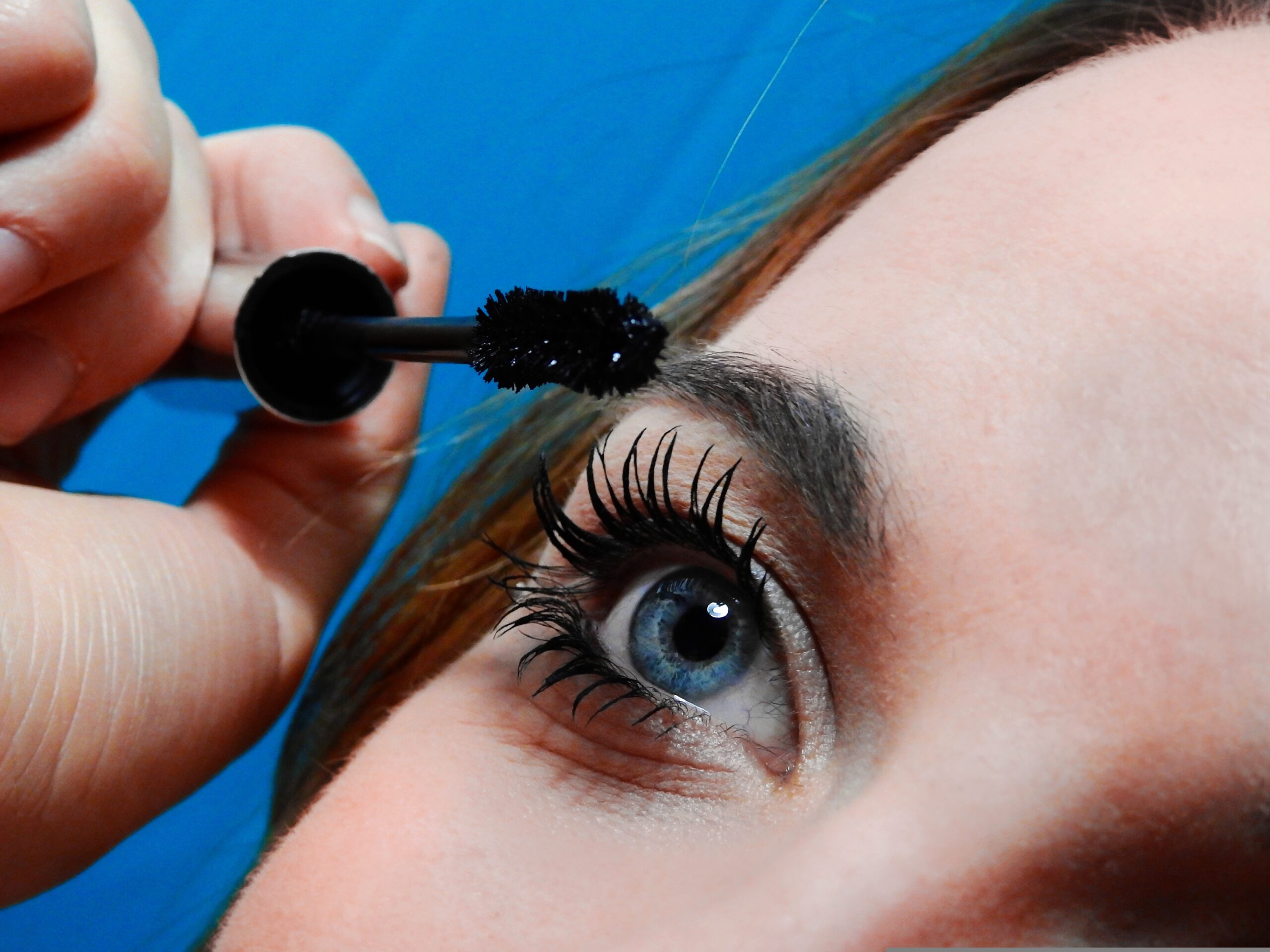
Carnauba wax, a common ingredient in mascaras, has been linked to contact dermatitis on the eyelids
Other ingredients that can impact eye health
Beyond preservatives, many other cosmetic ingredients can impact health, especially when applied around the eyes.
Acrylates, commonly used in cosmetics and adhesives, can act as film-forming agents but have been associated with allergic reactions and are classified as possibly carcinogenic.
Carnauba wax, a common ingredient in mascaras, provides a glossy finish but has been linked to contact dermatitis on the eyelids.
Castor oil, often used to condition eyelashes, is generally considered mild but may cause temporary discomfort or epithelial damage when it contacts the eye surface.
Other substances such as cocamide diethanolamine and cocamidopropyl betaine are used as surfactants and thickeners. These ingredients have been associated with irritation, allergic reactions and possible carcinogenic classification in some studies.
Fragrances are another common source of adverse reactions. Certain compounds, particularly when oxidised, can cause skin irritation and may interfere with hormone regulation.
Heavy metals, including lead, nickel and mercury, can be present in trace amounts in cosmetics, especially in products designed to shimmer or provide pigment. These substances are known allergens and, in some cases, toxic. For example, nickel is a common cause of contact dermatitis, while lead exposure is associated with systemic toxicity.
Other allergens include gold, which has been identified as a significant contact allergen, and lanolin, which may cause allergic reactions when applied to sensitive or damaged skin.
Even seemingly safe ingredients like nylon fibres, used to enhance eyelash volume, have been reported to embed in ocular tissues and trigger inflammation.
Phthalates are widely used as solvents and plasticisers in cosmetic products and packaging. These compounds are particularly concerning because they can penetrate biological tissues and have been linked to endocrine disruption.
Research indicates that phthalates may affect reproductive health, cardiovascular function and neurological development. Some have been banned in certain regions due to these risks, although they remain in use in others.
Products designed for eyelash growth illustrate the complexity of cosmetic safety. Prostaglandin analogues (PGAs), originally developed as medications, are now used in over-the-counter cosmetic serums to enhance eyelash length and thickness.
Most of the studies on PGAs reviewed by the TFOS paper2 reported adverse incidents of ocular surface disease-related symptoms or signs, such as ocular irritation, stinging, pruritus or meibomian gland dysfunction (MGD). However, the report concluded that there were massive gaps in the scientific knowledge of how these products affect the ocular surface.
Summary
It is easy to see how the use of cosmetics around the eyes may exacerbate or promote the development of ocular surface and adnexal disease, mechanisms include chemical toxicity, disruption of tear film stability, MGD, and inflammatory responses. Understanding these interactions is essential for clinicians managing patients with dry eye disease.
Finally, it’s worth it’s searching for make-up suppliers who use eye-friendly ingredients – as there are a few around.
References
1. Casemore RK et al. A prospective, longitudinal study to assess progression of ocular surface signs, tear cytokines and protein profiles in young adults. The Ocular Surface 2025;37:57-67.
2. Sullivan DA et al. TFOS Lifestyle: Impact of cosmetics on the ocular surface. The Ocular Surface 2023;29:77-130.
3. Craig JP et al. TFOS Lifestyle Report Executive Summary: A Lifestyle Epidemic – Ocular Surface Disease. The Ocular Surface 2023;30:240-253.
4. Cochran ML et al. Anatomy, head and neck: eyelid. In: StatPearls [Internet]. Treasure Island (FL): StatPearls Publishing; 2026 Jan.
Useful sites
Cosmile Europe: an app for analysing make-up ingredients.
Campaign for Safe Cosmetics.
Keith Tempany FBDO CL FBCLA qualified in 1976 and worked in both independent and multiple practice before opening a fee-based contact lens only practice in 2002. He is a fellow and a past president of the British Contact Lens Association (BCLA) and oversaw the development and launch of its Myopia Management Certificate. Keith is the store director of Leightons & Tempany Opticians & Hearing Care in Poole, and works as an independent consultant. He is an experienced author, lecturer and facilitator of contact lens and dry eye education both nationally and internationally.