Duchess highlights women’s eye health
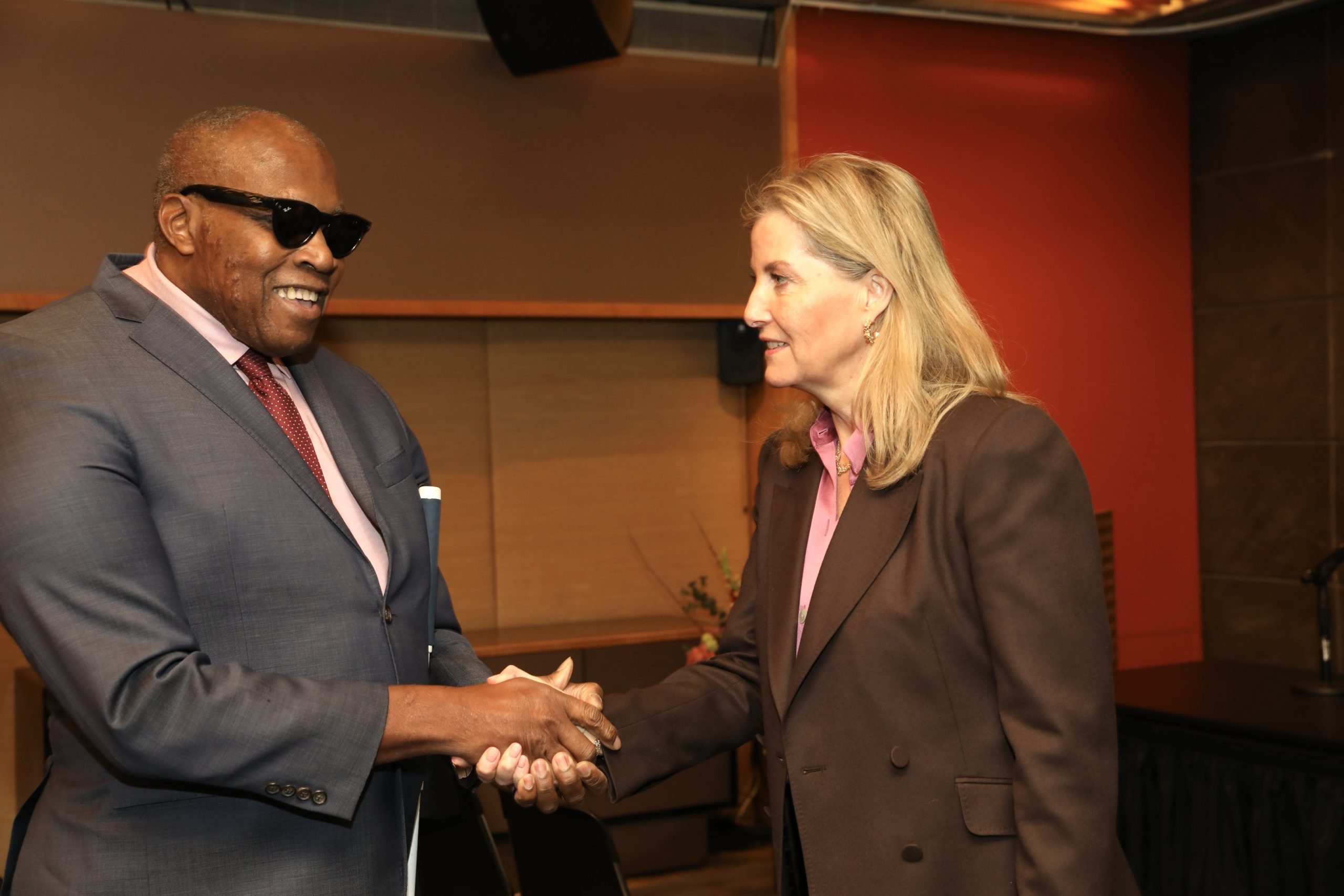
HRH The Duchess of Edinburgh shakes hands with HE Ambassador Walton Webson, permanent representative of Antigua and Barbuda to the UN and co-chair and founder of the UN Friends of Vision Group
Her Royal Highness The Duchess of Edinburgh, in her role as global ambassador for the International Agency for the Prevention of Blindness (IAPB), has delivered a keynote address at a UN Friends of Vision group meeting titled, ‘No woman left behind: closing the gender gap in eye health to achieve the SDGs’.
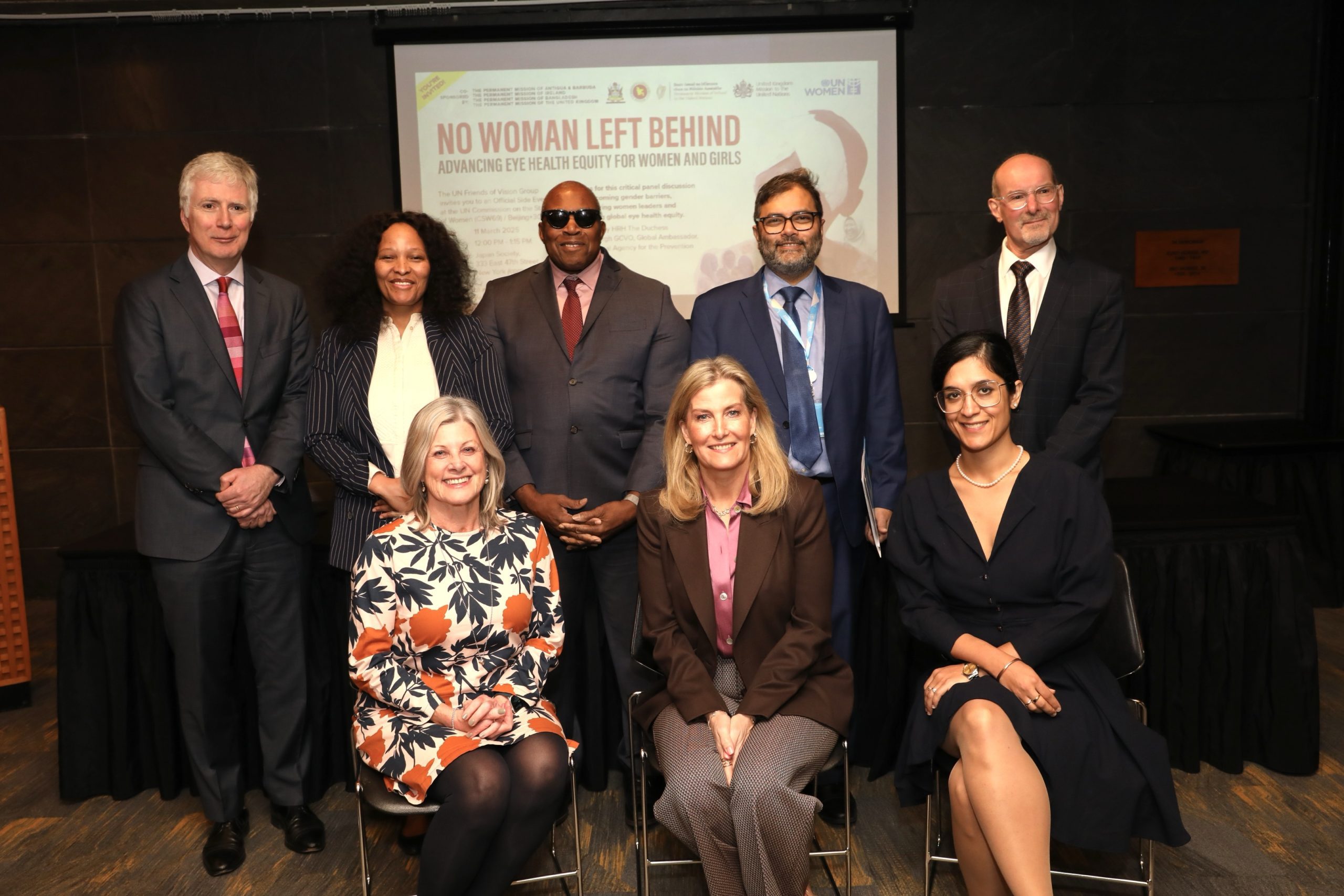
Back Row: Peter Holland, Gladys Mokhawa, Walton Webson, Dr AH Monjurul Kabir and Werner Obermeyer Front Row: Jennifer Gersbeck, HRH The Duchess of Edinburgh, Tara Soomro
Held on the margins of the UN Commission on the Status of Women in New York, the event emphasised the important connection between eye health and gender equality , with the Duchess saying: “Women and girls have the right to see and BE seen”.
Addressing an audience of UN ambassadors and agency staff, the Duchess underscored that improving eye health, particularly for women and girls, was essential for advancing gender equity.
She said: “I am here today to stress to you the importance and imperative of eye health, which on the face of it when so much strain is being felt in so many ways may seem a little odd, but I assure you when we get it right with eye health it has incredible life changing, far reaching positive impacts beyond the act of saving or restoring sight, which is why I am passionate about it and why it is so deserving of our action and attention.”
The Duchess highlighted the progress made in trachoma elimination, citing recent successes in Vanuatu and Vietnam, but stressed the persistent gender disparities, particularly among marginalised women, including nomadic, indigenous communities, and women with disabilities.
She called for continued action and tailored approaches to ensure equitable access to eyecare: “If women and girls have access to proper eyecare they are not only more likely to secure better educational and career opportunities, as often the principle backbone of the family, they are then more able to juggle the many responsibilities a woman plays in the home, as well as contributing to community life.
“But more than that we must let the money speak for itself – the loss every year to countries with large numbers of people in their populations with sight issues runs to the billions of dollars, yet correcting refractive error alone in children could result in more than 50% increase in their lifetime earnings.”
Speaking after the event Peter Holland, IAPB CEO, said: “We are at a critical juncture in global eye health – failure to act now will lead to a future where even more people are affected by preventable or treatable sight loss. As an eye health sector, we are working with decision makers to deliver policy commitments already made in the UN Resolution on Vision.”
“Eyes are the windows to the soul, as the saying goes, but we know that they’re actually a window to gender equity,” said Jennifer Gersbeck, executive director – influence and scaling impact at the Fred Hollows Foundation. “Women and girls make up 55 per cent of the world’s blind and vision impaired, yet when they can’t access the eyecare that they need, it entrenches them further in poverty. Without urgent action, millions of women and girls will continue to be left behind.
“The Commission on the Status of Women is a critical opportunity to advocate for concrete policies and investment to ensure all women and girls have access to quality eyecare, unlocking their full potential,” she concluded.
Aligning eye health with the Sustainable Development Goals, the Duchess positioned eye health as a critical enabler of economic development, productivity, education attainment and gender equality.
She encouraged continued international momentum and cross-sector collaboration including the first-ever 2026 Global Summit for Eye Health, to be hosted by the IAPB.