ABDO welcomes RNIB report
Report aims to support NHS costed proposals
ABDO has broadly welcomed the core messaging contained within a new report from the Royal National Institute of Blind People (RNIB), setting out ‘six simple solutions’ to save the NHS £1bn over the next 10 years.
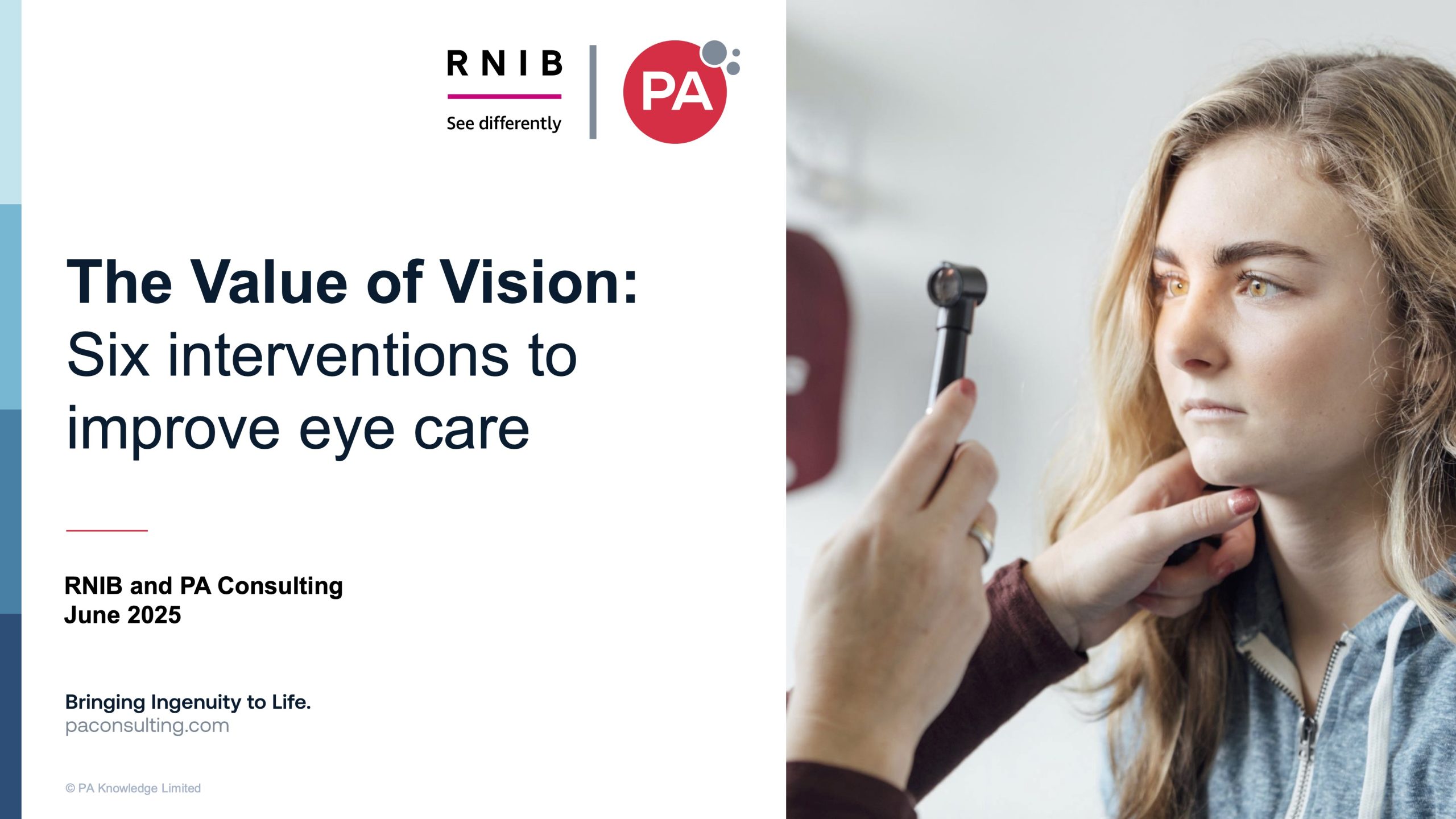
Titled ‘The value of vision: six interventions to improve eye care’, the report, which includes analysis by PA Consulting, has been timed to coincide with the imminent launch of the government’s 10-Year Health Plan to help prioritise eye health.
The RNIB’s six proposals for change in the report are (verbatim):
1. Improve connectivity by ensuring all primary eyecare providers have an NHS email address – which would have an expected annual £20m saving to the NHS in England.
2. Ensure all primary eyecare providers have access to advice and guidance from secondary care to reduce unnecessary referrals.
3. Streamline referrals by creating single points of access – creating an expected annual £55m; £171m saving to the NHS in England.
4. Embed the Eye Care Support Pathway within clinical pathways – driving an expected annual £3.99m saving to the NHS in England.
5. Fully use the skillset of optometrists in primary care – expected annual savings could be as much as £77.2m to the NHS in England
6. Incorporate an increased focus on tackling Did Not Attends (DNAs) into planning guidance and the Elective Recovery programme – potential annual savings could be as much as £80.7m to the NHS in England, depending on the chosen approach to address DNAs.
The sight loss organisation states that some of the outcomes of the implementation will include:
• Improved patient outcomes: faster diagnosis, reduced clinical risk, more personalised support
• Reduced pressure on hospitals and GPs: fewer unnecessary referrals and wasted appointments
• Significant financial efficiencies: up to £1bn of potential savings over the next decade
• A more sustainable NHS in England: fewer missed opportunities and reduced risk of harm
Matt Stringer, RNIB CEO, said: “We know that eye health has one of the biggest waiting lists of any speciality in England, with 586,079 people, nearly eight per cent of the total NHS waiting list, waiting this spring for what could be life-changing treatment. Our report is aimed at supporting the NHS costed proposals that would at once alleviate cost and pressures in the system – and put patients first.
“We believe these simple solutions would help the NHS to tackle financial and operational pressures – and, at a very human level, reduce the substantial number of people being referred to hospital with a concern they have a serious eye condition when a local optician could rule this out instead. We hear from people how distressing this is, which is why we as RNIB are also keen to embed our support all along the patient pathway.
“Technology is already being used in the health system with virtual wards, image analysis and remote consultations. The solutions we are advocating for are tried and tested, and in many cases – like email addresses – seemingly incredibly simple for the positive effect they could have. These proposals represent practical changes that can be implemented relatively quickly and simply. Doing this now would make a positive impact on patients’ eye health. Some will be more straightforward to implement, but action needs to be taken now.
“RNIB is urging the Department of Health and Social Care, NHS England and each Integrated Care Board to adopt these interventions as part of a roadmap to make eye health fit for the future,” added Matt.
Max Halford, ABDO clinical and policy director, commented: “There is much to unpack in the RNIB’s lengthy report, which we broadly welcome as providing evidence around important issues, such as the economic and social benefits of improving eyecare access within High Street optical practices.
“We also welcome the report in highlighting the financial impact that ‘Did Not Attend’s have on secondary care colleagues – something all ABDO members will have experience of. Having also been involved with development and launch of the RNIB Eye Care Support Pathway, we strongly support its continued expansion.
“The report very much aligns with the optical sector’s call for more primary eyecare to be provided in the local community – providing patients with easily accessible care closer to home. However, there continue to be barriers to much of what the report is calling for – including the IT disconnect between primary and secondary care – and a general shortfall in funding to overcome these challenges.
“We welcome the report’s recognition of the potential that exists within the optometry workforce, however, it fails to acknowledge the skillset of the 6,000 plus dispensing opticians and contact lens opticians working in primary eyecare as part of the multi-disciplinary team.
“We look forward to continuing to work with the RNIB and our sector colleagues in focusing on many of the issues contained within the report as we await details of the government’s new 10-Year Health Plan,” Max added.