Survey shows vulnerable patient concerns
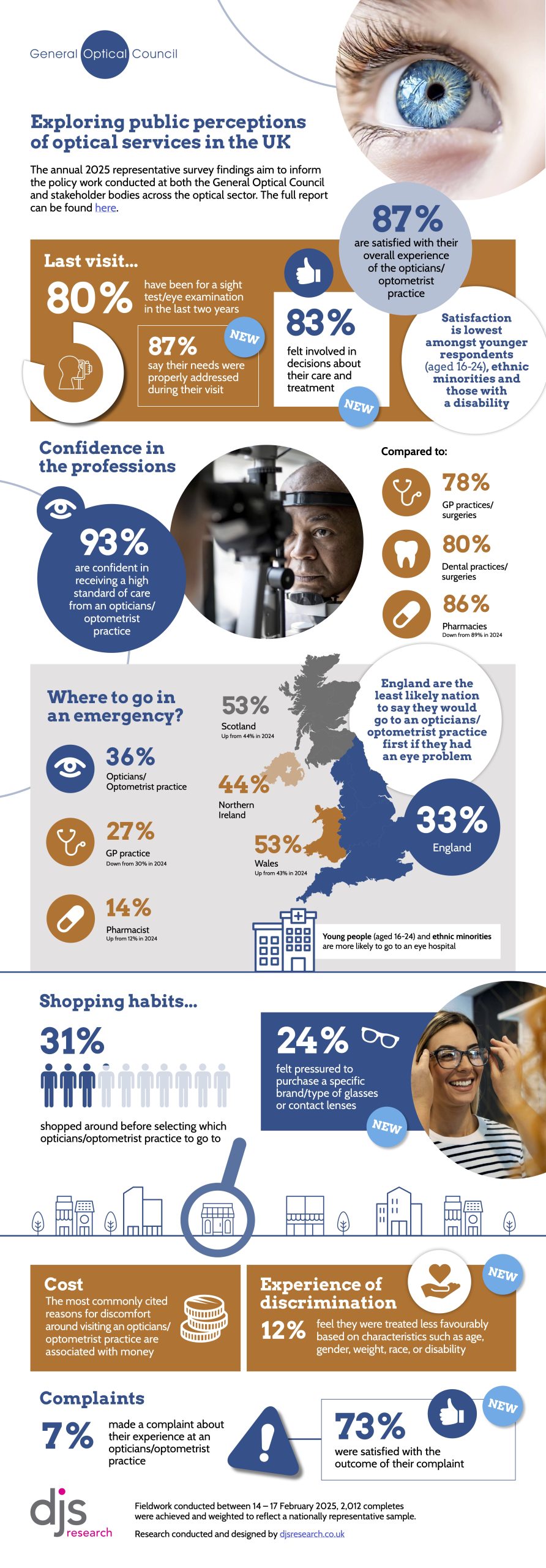 New research from the General Optical Council (GOC) has found that vulnerable patients are less likely to be happy with eyecare services, despite high public satisfaction.
They survey found 87 per cent of research respondents were satisfied with their overall experience at an opticians/optometrist practice, with 93 per cent of respondents are confident in receiving a high standard of care. This figure remains higher than dental practices (80 per cent), pharmacies (86 per cent), and GP practices (78 per cent), states the GOC.
However, the research also shows that vulnerable patients are less likely to have received a sight test in the last two years or were less satisfied with their experience. Respondents less satisfied with their overall experience includes those from an ethnic minority background, with a disability, carers and low household income earners.
More people would turn to an opticians/optometrist practice for eye problems in the first instance (36 per cent), compared to a GP (27 per cent), pharmacy (14 per cent) or eye hospital (nine per cent). This figure was higher in Scotland (53 per cent), Wales (53 per cent) and Northern Ireland (44 per cent) than in England (33 per cent).
The cost of spectacles/contact lenses (22 per cent) and sight test/eye examinations (17 per cent) continue to be the main reasons why some feel uncomfortable visiting an opticians/optometrist practice.
Those with a disability were more likely than average to say that something went wrong with their service or care (19 per cent), as were carers (23 per cent), and those with a household income of less than £20,000 (19 per cent).
Steve Brooker, GOC director of regulatory strategy, said: “When it comes to eyecare, our survey shows that government can make the shift from hospital to community-based care set out in its 10 Year Health Plan knowing that the public trust optical professionals and are satisfied with the care they receive.
“Making the shift requires raising awareness that an optical practice does more than test sight and sell eyewear. Persuading people to turn to an optical practice first when they have an eye problem, rather than visit a GP or hospital, is particularly urgent in England which lags behind the other UK health systems on this measure.
“Tackling inequalities is a priority for all health systems in the UK, so it’s concerning that our survey continues to show some groups in society are less satisfied with their visit to the opticians,” continued Steve. “We recently strengthened our standards of practice and we’ll shortly be consulting on guidance to support professionals when caring for people in vulnerable circumstances.
“Making sure everyone can access safe and effective eyecare must be a key focus for the sector, so we strongly encourage employers, professional and representative bodies and others to work in partnership with us to address inequalities of access and experience in eyecare.”