All eyes on sustainability
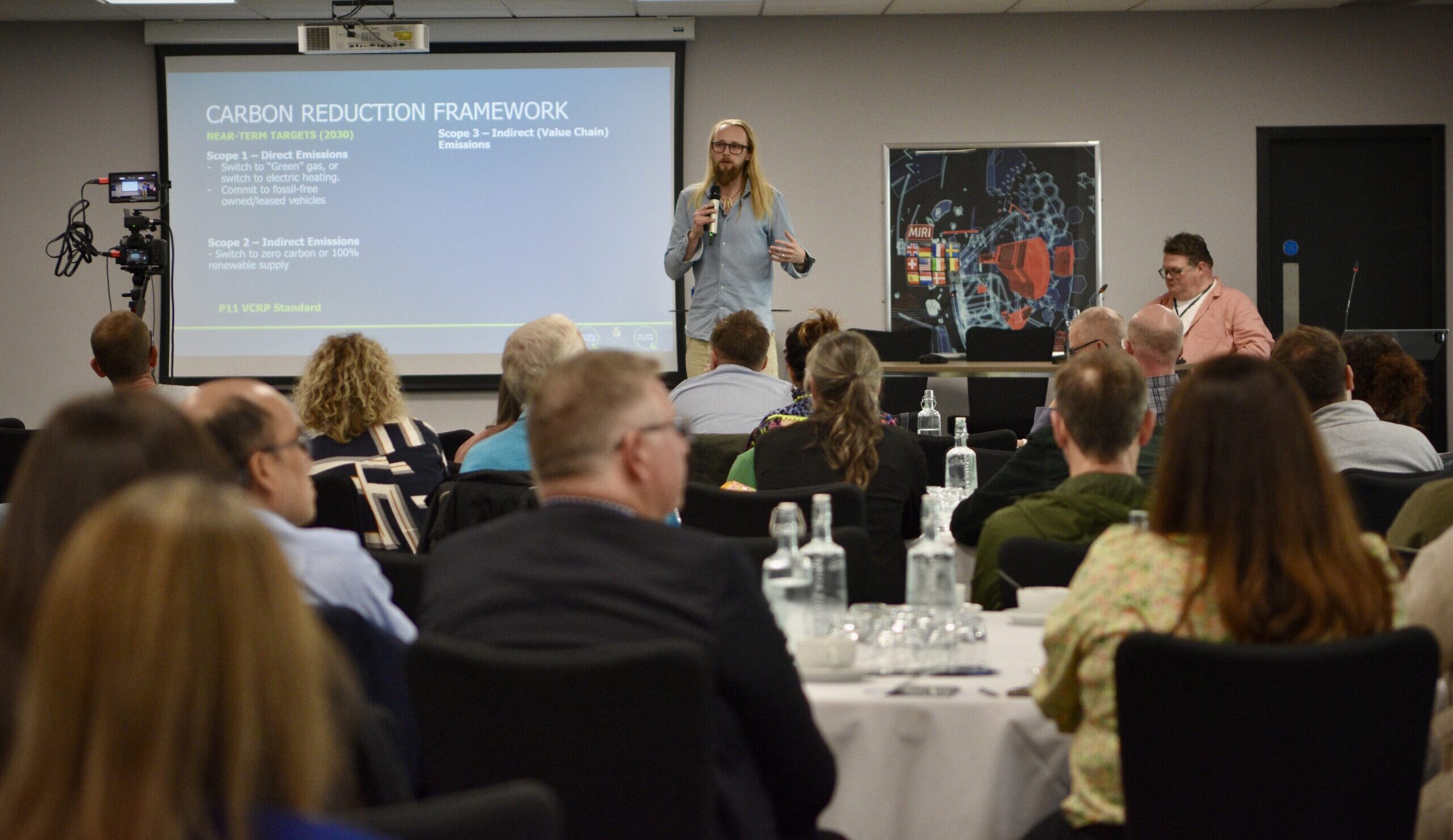
Andrew Clarke provides practical tips and guidance
In early October, I made my way to the National Space Centre in Leicester for the third Eyes on Sustainability Conference.
Introduced by Simon Jones, editor of Optician magazine, the programme of speakers ensured a wide variety of perspectives on the themes of corporate social responsibility (CSR) and sustainability.
Alessandra Girardi, vice president of Vanni Eyewear, spoke about the actions the company had taken since becoming a Società Benefit in 2021. Under Italian law, this means pursuing objectives of common benefit as well as profit, and monitoring its social and environmental impacts. The company is proud of the fact that all the research, design and production of its frames takes place in Italy, which reduces its carbon footprint. A recent Life Cycle Assessment showed that the carbon footprint of one of the acetate frames from the company’s range was 2.35kg CO2 – compared with around 4.5kg CO2 for a frame produced in China.
Helen Curran then spoke about Specsavers’ aim to be ‘net zero’ by 2050, with many strands such as minimising waste and water usage, switching to renewable energy, and opting for more sustainable frame materials and packaging. She also spoke about the work Specsavers does within the community with homeless people, ensuring they are able to access eye health care, and suitable correction when needed. Helen also facilitated a CPD session later in the day, looking at how everyday interactions with patients in practice can have an impact on sustainability, including the environmental impact of remakes, and extra journeys which could be avoided with better diary management and staff training.
Clare Pearce and Francesca Blackmore, winners of the Sustainable Practice of the Year in the 2024 Optician Awards, chatted with Simon Jones about practical steps they have taken in their practice, such as stocking sustainable frame ranges, having a refillable lens spray station, and not automatically giving out new cases with every pair of specs.
One of the practice’s more creative ideas is to recondition used frames to sell as an alternative to a new frame. Their advice to practices wanting to be more sustainable was to ask suppliers about their sustainability credentials, and talk to patients about their sustainability journey and encourage them to support their goals.
Why have sustainability goals?
Having heard about some of the actions companies and individuals are taking towards sustainability and CSR, it was time for a reminder of why we should have sustainability goals.
Andrew Clark of Net Zero Eyecare introduced delegates to the Polycrisis – a situation where the multiple challenges of climate change, plastic pollution, economic crisis and geopolitical tensions can seem overwhelming, sometimes leaving us feeling helpless. Andrew explained that the UN had developed 17 Sustainable Development Goals to address these multiple issues, with biodiversity forming the foundation on which everything rests.
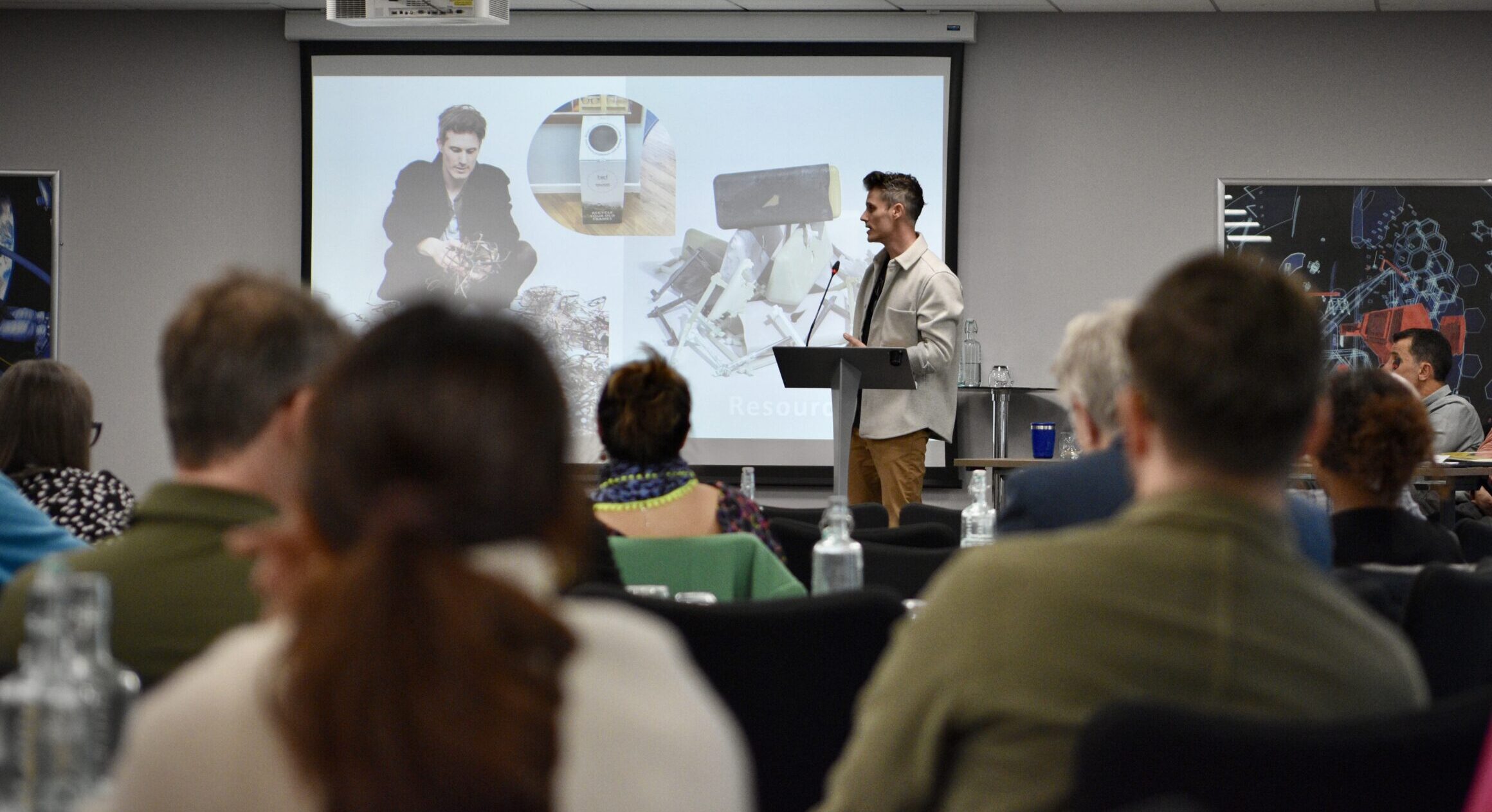
Ed Bird discusses the company’s waste-reduction strategies
Having painted a rather stark picture, Andrew reminded us that we can all take simple actions like changing to renewable energy, reducing waste, and committing to sustainable travel – particularly zero domestic air travel. A suggestion around sustainable travel was to engage with your MP annually to improve sustainable travel.
Andrew also took to the stage again later in the day, representing Frame the Future, a group of industry insiders with a mission to unite the sector with a collective action to drive sustainability. Aware of the sector specific challenges, the organisation is currently conducting a baseline study to take stock of the state of sustainability in the sector to help define the next steps for the alliance.
The contact lens industry was represented by Paul Riggs, director of science and sustainability at CooperVision, who talked about the company’s drive to eliminate waste and unnecessary packaging, and to source materials responsibly.
CooperVision also partners with Plastic Bank to offset a portion of its plastic footprint. Through this partnership, CooperVision funds the collection and recycling of ocean-bound plastic equivalent to the weight of plastic used across its range of soft contact lenses, including the lens, blister and packaging components that are sold throughout the Americas, Europe and Asia-Pacific. This support helps Plastic Bank fund community development programmes.
Paul also highlighted the campaign by Euromcontact to encourage contact lens wearers to recycle packaging and dispose of contact lenses responsibly, with a downloadable patient flyer available from its website
With a slightly different perspective, both Hoya and Bird Eyewear have schemes to support biodiversity along with their other sustainability measures, partnering with local wildlife organisations to create wildlife havens in their local communities. Hoya also has community schemes across many countries to improve biodiversity and healthcare.
The event demonstrated that there are some fantastic initiatives taking place within the industry. It’s easy to think that it’s impossible for us to make much difference, but we can all do something, and once you’ve done that one thing, move on and do another.
Every small action adds up, so why not set yourself some small targets today?
Have a look at the ABDO SEE Hub for some inspiration.
Download a PDF of useful links.
Abi Crutcher FBDO CL Prof. Cert. LV is ABDO’s regional lead in Wales, and the Association’s sustainability lead. Email acrutcher@abdo.org.uk