ABDO Clinical Conference 2025: report

Delegates worked together across all four interactive workshops
The ABDO CPD team is known for making interactive learning both fun and effective – and this year’s Clinical Conference was no exception…
Putting multi-disciplinary dry eye management centre stage, the 2025 ABDO Clinical Conference practical days were held on Sunday and Monday 12 and 13 October at the National Resource Centre (NRC) in Birmingham.
Featuring four interactive workshops designed to enhance clinical confidence and foster collaborative care across the practice team, the programme provided delegates with 12 interactive CPD points – with an extra two points available on successful completion of a visual recognition test.
Supported by Platinum Sponsors EssilorLuxottica and Topcon, and Gold Sponsors Alcon, the Body Doctor, Fidia, Grafton Optical, Mainline Instruments and Scope Eyecare, the conference also enabled delegates to gain further insights into dry eye solutions and diagnostic instrumentation designed to aid successful patient management. Sponsors also had a role to pay in the conference’s escape room style workshop, giving the programme an extra dynamic.
Supporting a dry eye clinic
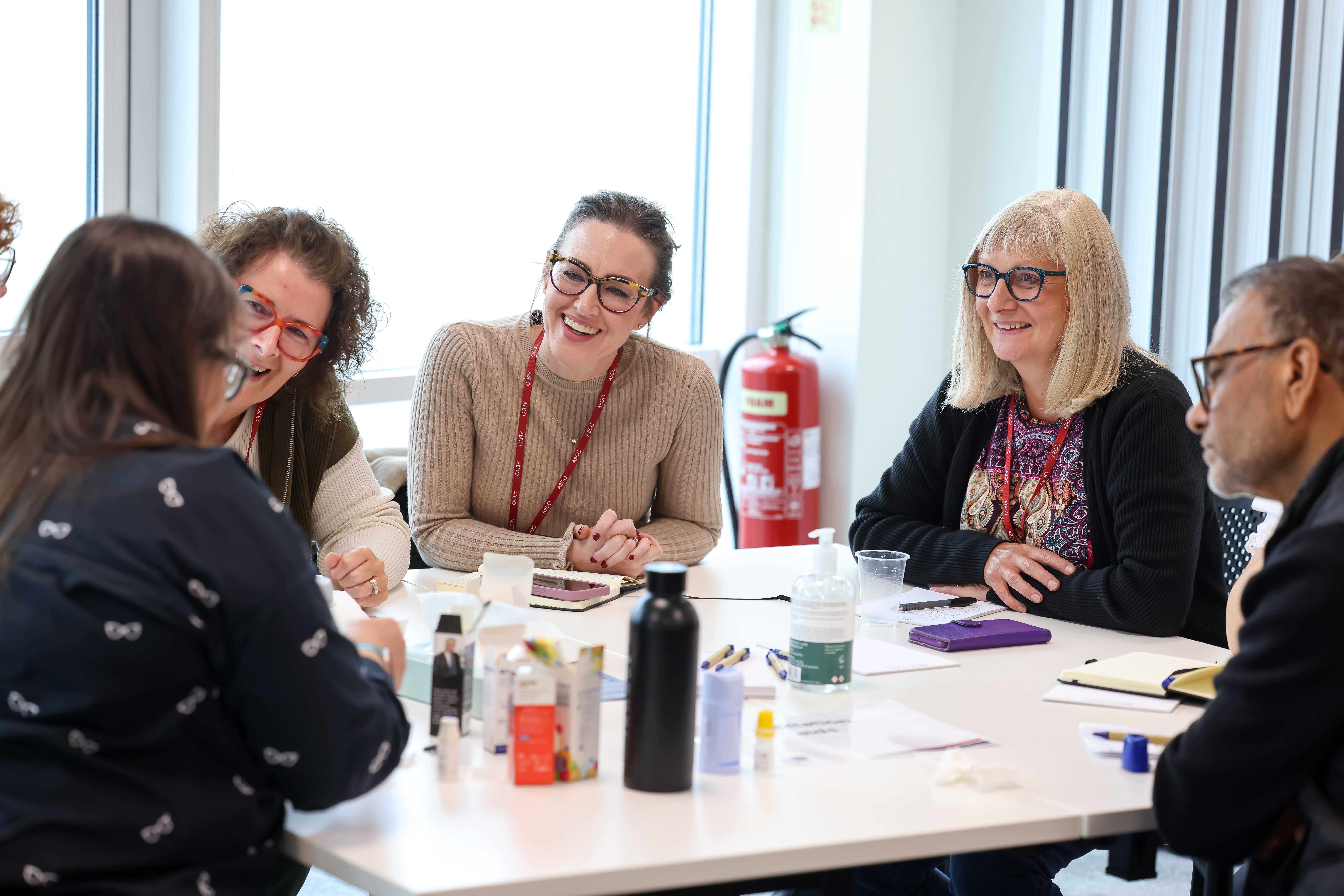
Exploring different dry eye solutions and therapies
In a practical session titled, ‘Supporting the dry eye clinic’, delegates explored the key skills for understanding, using and teaching the application of ocular lubricants and adjunct therapies as part of dry eye clinic. Facilitated by Diane Nash and Pauline Bradford, with support from Mandy Davidson and Colin Davidson of sponsor Scope Eyecare, the session was divided into interactive stations to help build both clinical confidence and patient education strategies.
Delegates looked at different solutions and their uses, and explored when to recommend which product. The efficacy and applications of different ingredients were explored, along with the importance of drops being preservative-free, for example. The session also covered the use of eyelid sprays, patient compliance, hygiene and the mechanisms by which different drops are kept sterile.
The use of ointments and water-based gels – as well as the pros and cons of Minims single use drops – were discussed too. Delegates then split into groups to get hands-on with different dry eye products, discussing their uses and benefits, how to make recommendations, instillation methods and different adjunct therapies.
Colin Davidson, an optometrist, said afterwards: “It was a pleasure to help deliver this session. What stood out most was how the whole practice team contributes to a multi-disciplinary approach to managing dry eye. It was great to see delegates engaging with the material and recognising the importance of understanding how drops and adjunct therapies complement each other, so that everyone can contribute to better patient care.”
Escaping the circle of dry eye disease
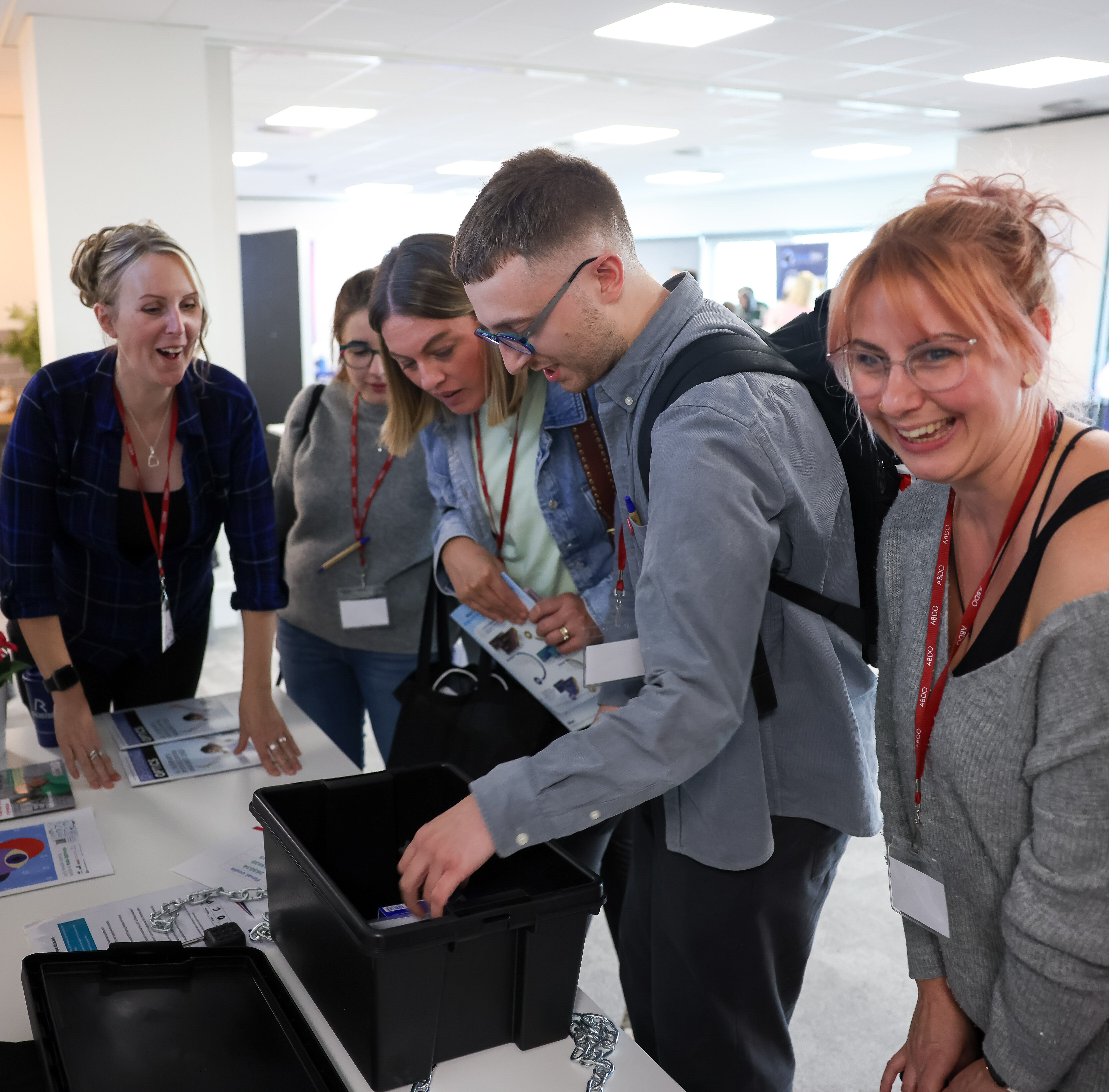
Cracking the escape room quiz to unlock the box
In an interactive educational escape room set within the conference exhibition space, delegates were tasked to work together in teams to better understand how patients can be supported with the diagnosis and management of dry eye and ‘escape’ the dry eye disease (DED) circle.
This session, facilitated by Alex Webster and Cheryl Hill, required delegates to interact with exhibitors at different stations, using equipment and asking questions, to obtain a series of codes to uncover the final passcode and win – all while a digital clocked ticked down the 90 minutes allocated.
Delegates were asked, for example, to apply the Tear Film and Ocular Surface Society (TFOS) Dry Eye Workshop (DEWS) III diagnostic methodology to patient data provided to ascertain which patient met the criteria for a DED diagnosis, and to find out which single parameter was a definitive indicator for aqueous deficient dry eye. Six teams celebrated being the first to ‘escape’ the circle of DED.
Dry eye on the frontline
In a workshop titled, ‘Dry eye on the frontline’, delegates turned sleuth as they worked together using their clinical knowledge, skills and provided equipment to identify underlying eye conditions and suggest management and/or referral strategies.
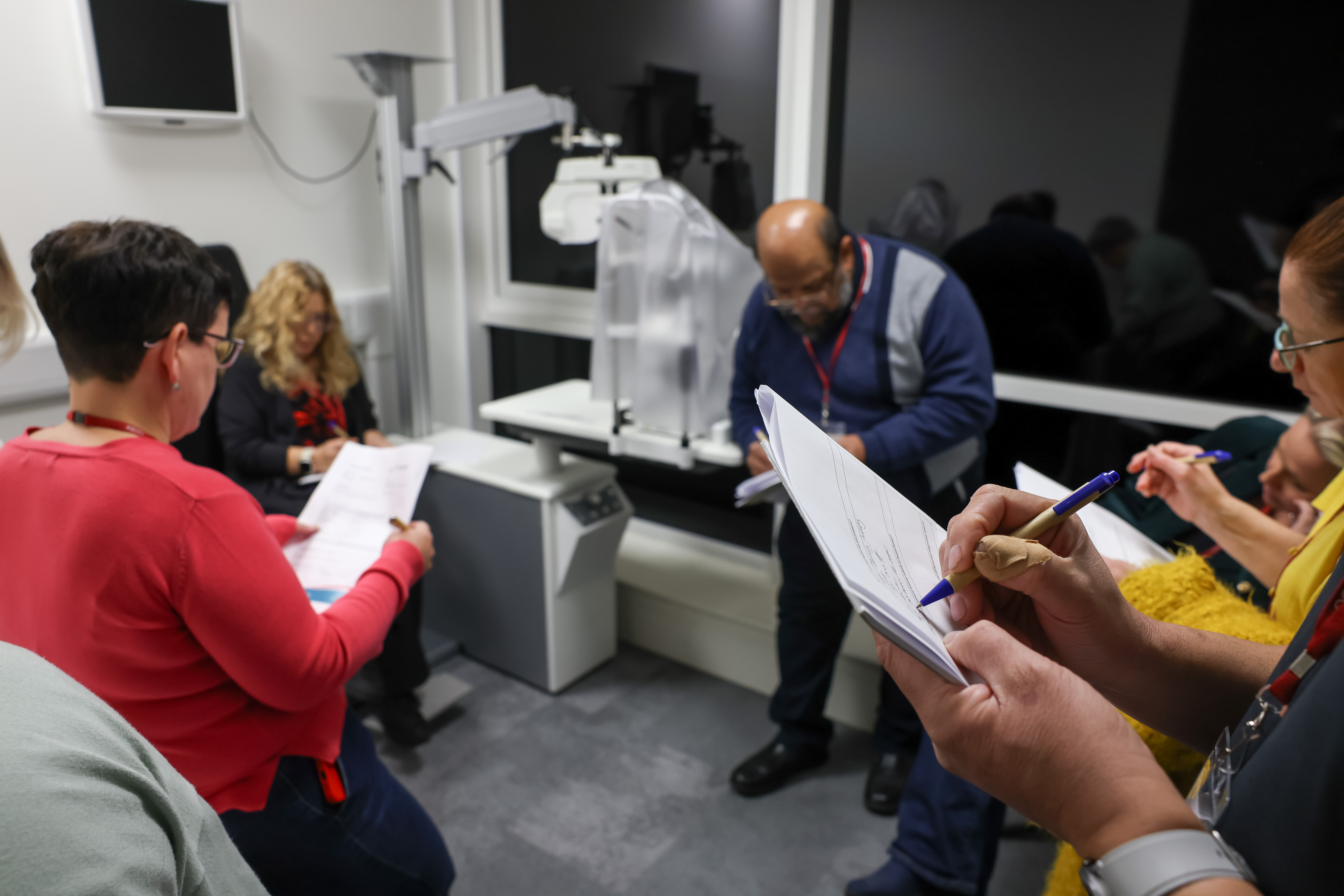
Delegates using triage forms to assess the ‘patient’
The workshop was led by Max Halford, with Abi Crutcher, Graeme Stevenson and Lynne Pulley acting as three ‘patients’ presenting with potential dry eye concerns. Delegates worked in teams to analyse the information provided, ask the patients questions using triage forms, and formulate appropriate next steps whilst considering the wider multi-disciplinary eyecare team in the practice.
In one case example, ‘Agatha’, 47, was a long-term soft contact lens wearer, using unknown lenses from the internet, and not currently a patient at the practice. She had called in to see if the practice had anything to help her with her current problem. She reported increasingly struggling with her contact lens wear, with both discomfort and on/off poor vision.
Representing Agatha was Abi Crutcher, who reported back during the group discussion that all delegates had made use of the triage form provided, and discussed compliance with the patient; they had also correctly identified the signs and symptoms of the presenting condition – and all three groups had arrived at a diagnosis of blepharitis.
Abi reminded delegates that regular contact lens aftercare was important for preventing problems from arising in the first place, as was finding the most comfortable contact lens for the patient. Therefore, a re-fit should be offered if the patient was experiencing discomfort. It was also important to ask the patient carefully about their reduced vision – as any loss might indicate a serious underlying issue.
Other take-home points included the importance of effective communications, and using triage forms to build up a record of patients including those who telephone with an issue – so plans can be made before they come into practice not when they come into practice.
Max also reminded delegates to get to know the dry eye products on their shelves, perhaps choosing a preferred range and becoming the practice expert in DED treatment. He added that managing dry eye was well within the DO’s and CLO’s scope of practice, something which would inevitably vary alongside career progression and experience.
Dry eye puzzle: diagnostic strategies from TFOS DEWS III
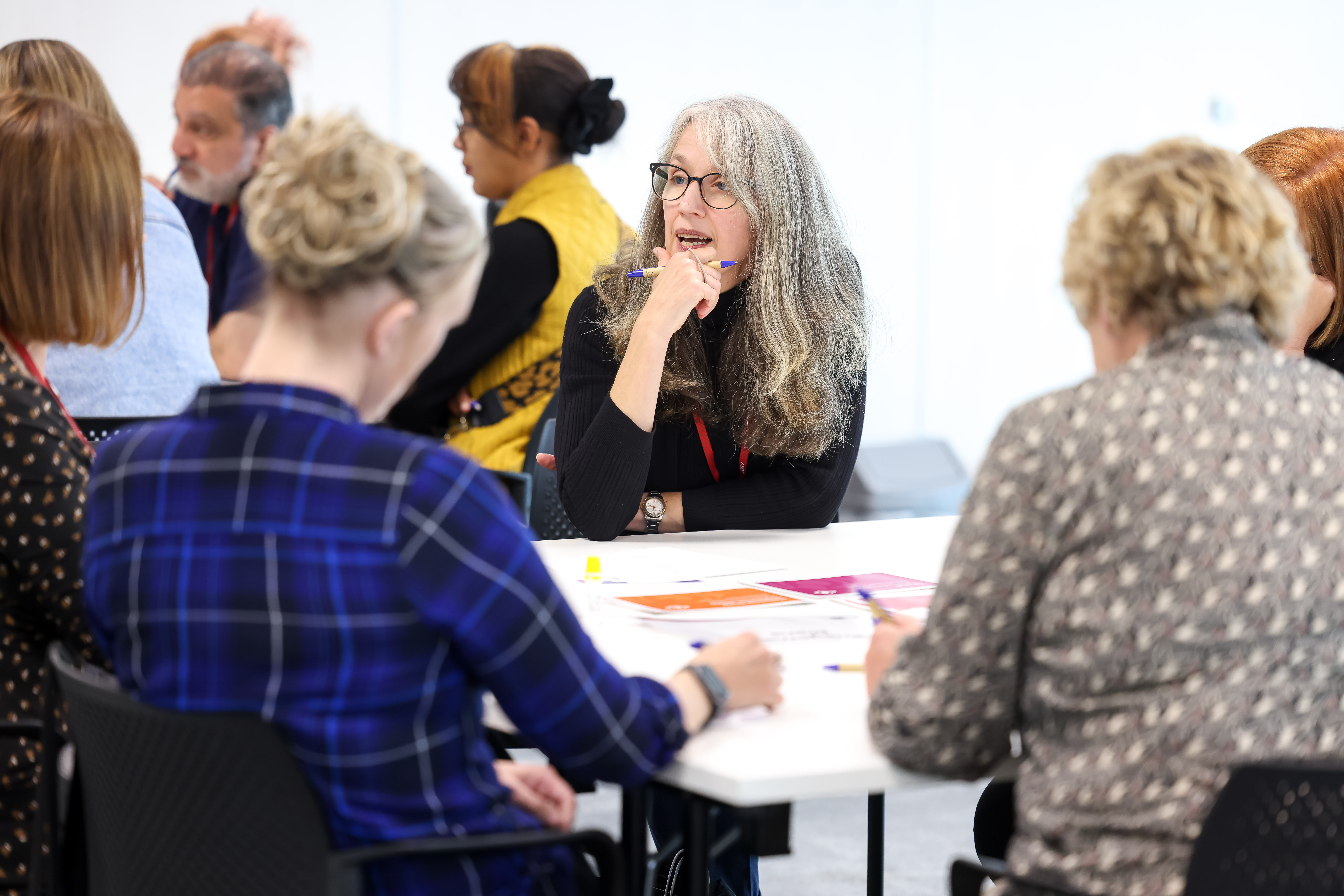
Discussing the use of dry eye symptom questionnaires in practice
Led by Tina Arbon Black and Amy Seaman, this discussion workshop explored the individual roles and scope of practice eyecare practitioners play in identifying and managing DED.
Delegates explored the use of dry eye symptom questionnaires in practice, particularly their effectiveness in capturing reported patient symptoms – including the OSDI-6 questionnaire recommended by the TFOS DEWS III Diagnostic Methodology Report – DED diagnostic challenges, early detection of risk, and record-keeping.
Tina emphasised that there was currently no ‘gold standard’ for DED diagnosis, and that it was important to remember that it was a multi-factorial symptomatic disease – as underlined in the TFOS DEWS III DED definition. Delegates were encouraged to use a DED questionnaire in practice where appropriate – highlighting that the Aston Dry Eye Study had found that one in three UK adults in the UK had DED.
Delegates, therefore, also discussed the risk factors for misdiagnosis or under-diagnosis if standardised testing criteria was not adopted – as highlighted in the TFOS DEWS III report. Accurate diagnosis and record-keeping were also discussed, stressing the importance of consistent communication strategies – including providing visual aids and written materials.
In summary, the four take-homes from this session were: 1) DED is a symptomatic disease; 2) utilise a differential diagnosis process; 3) be meticulous in your record-keeping; and 4) be consistent in your messaging.
Enthusiastic engagement all round
Speaking to DO Online after the conference, ABDO director of professional development, Alex Webster, said: “It was wonderful to see this year’s delegates engage so enthusiastically in the area of dry eye. The exhibition was buzzing with people exploring the products, technology and services available to support patients with dry eye, then learning through the CPD sessions about how the multi-disciplinary team can put these confidently into practice. I was particularly impressed with the competitive spirit shown in the escape room session – proving that knowledge is freedom.”
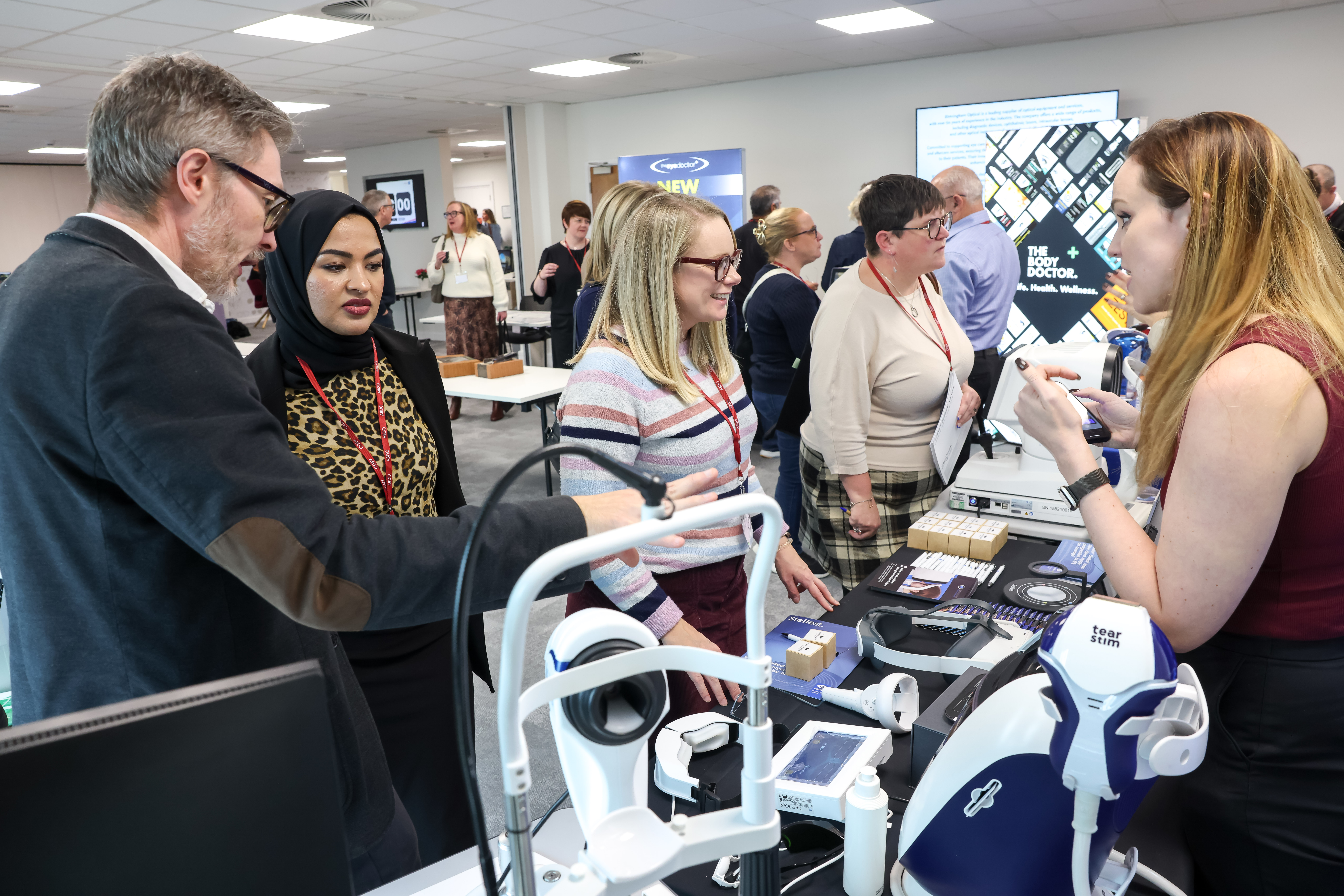
Speaking with sponsors about dry eye management
Delegate Davinia Hadley, recently-appointed to the ABDO Board, said: “This was my first ABDO Clinical Conference and it was a great experience. The early start allowed us to cover so many topics and obtain lots of valuable CPD. I enjoyed the group sessions, including an escape room exercise. This really encouraged the delegates to work together, speak to the sponsors and was a great way to make new optics friends along the way.”
ABDO member, Owen Miles, told DO Online: “I had an absolutely wonderful time discussing all things dry eye. It was so lovely to take home more knowledge on an area that is so vital to clinical competence. I feel very thankful for the wonderful community fostered by the collaborative work for clinical care and excellence at the heart of ABDO’s vision.
“What I found most helpful was the practical application of dry eye knowledge,” Owen continued. “It is one thing to know about the availability of treatments – but to really understand how they work enables you to provide expert levels of recommendation tailored to the needs of your presenting patient. This, in turn, builds into your patients’ experience how vital dispensing opticians are in clinical practice.”
Sameen Qayyum added: “Attending the ABDO Clinical Conference 2025 as an independent prescribing optometrist was an excellent opportunity to connect with dispensing opticians, contact lens opticians and optometrists. I gained valuable insights into practical dry eye management, new product developments, and patient care approaches. The event really highlighted the importance of multi-disciplinary teamwork and aligning clinical and optical perspectives to deliver more effective, patient-centred dry eye care.”
“Brilliant opportunity to support members”
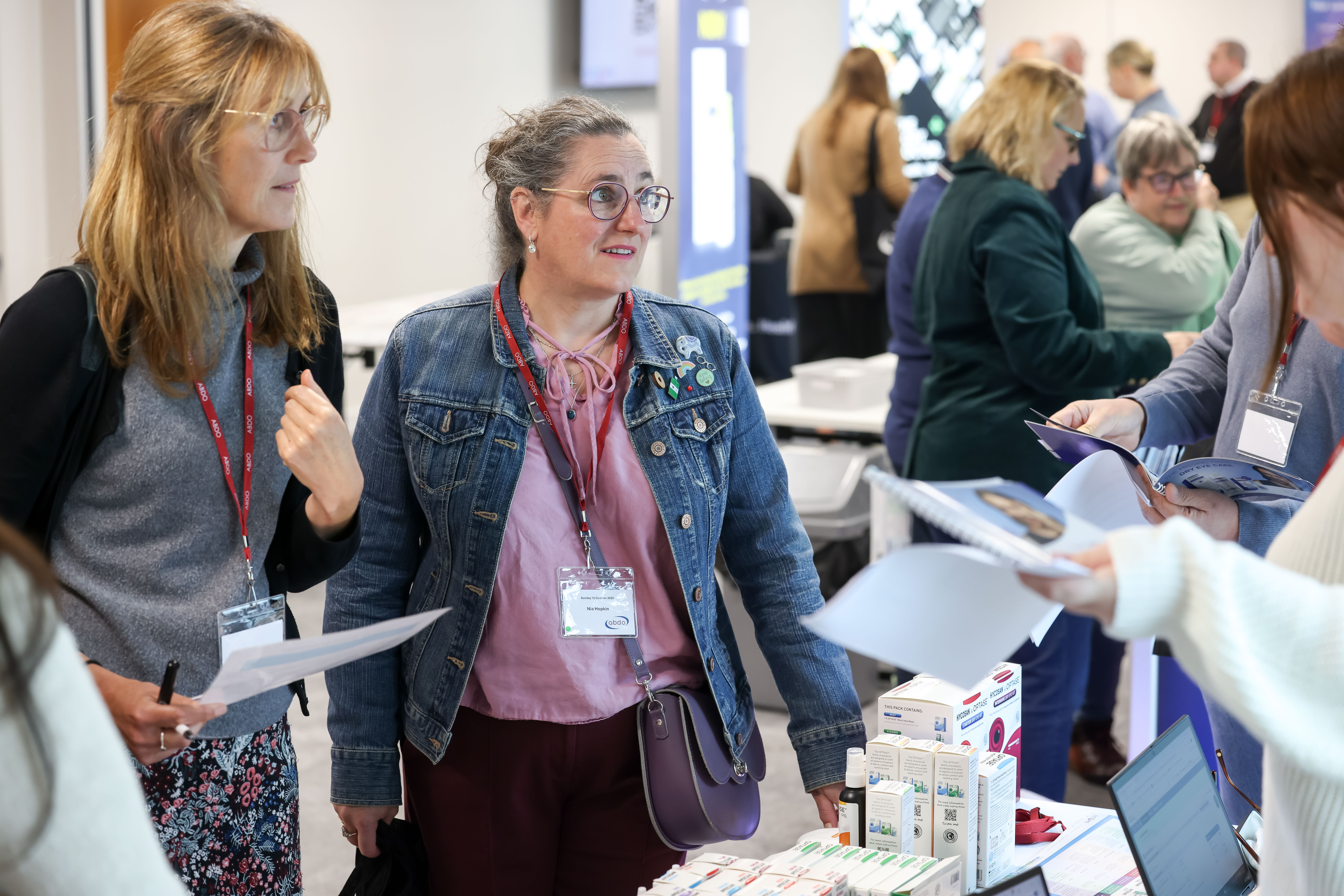
Sponsors helping with the dry eye escape room exercise
Recognising the valuable contribution made by sponsors in bringing the clinical conference to life, Alex Webster said: “As always, we are very grateful to all our sponsors, without whom we would not be able to deliver this education to our members. In particular, I thank them for understanding the role DOs and CLOs provide in delivering care to dry eye patients in High Street practice as part of the wider multi-disciplinary team.”
Darren Taylor, optometry sales and product training manager at EssilorLuxottica, said: “Thanks so much to the team at ABDO for another jam-packed two days. As always, the facilities were great and a warm welcome was guaranteed. Delegates were eager to talk with us and find out about all our latest news and offerings from the world of instruments, lenses and frames. The escape room event added a great opportunity to interact with everyone and, of course, brought out the competitive streak in some attendees. All in all, it was great to be able to support ABDO again this year.”
Richard Ball, regional sales manager at Topcon, said: “Thank you for a fabulous couple of days at your superb venue. The idea of delegates asking questions from the stand location, meant there was a far better engagement with all the sponsors present. This coupled with utilising the equipment for the answers gave a better understanding how to capture the required data in a practice setting.”
Vishal Gohil, professional education and development manager at Alcon, said: “It was a fantastic event – a brilliant opportunity to consistently engage with CLOs and DOs throughout the day. The interactive format made learning genuinely fun and impactful, and it was great to see such energy and collaboration across the board. Huge thanks to the ABDO team for putting together such a memorable experience — we truly appreciated being part of it.”
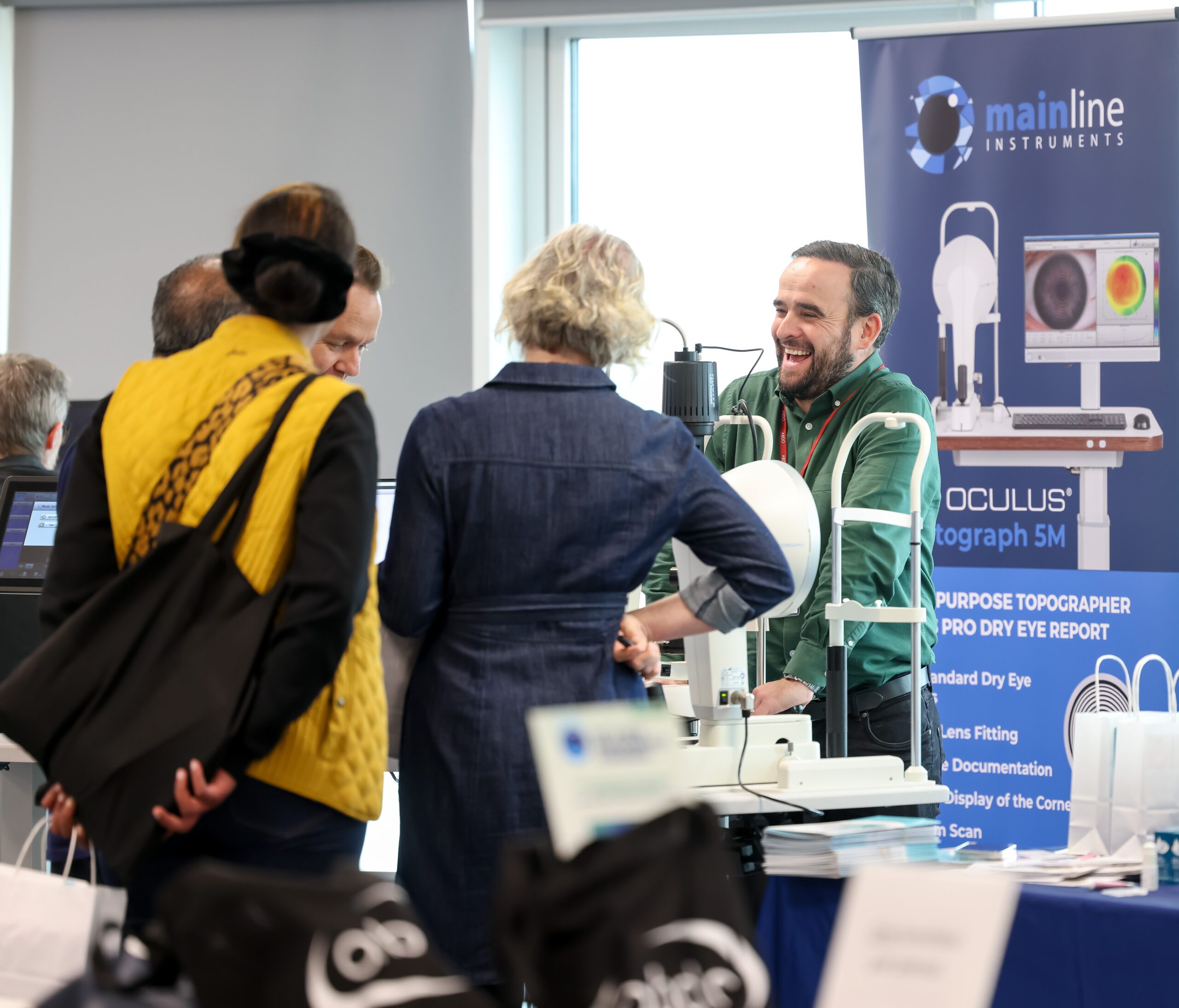
Enhancing product knowledge to take back to practice
Emma Meers, senior marketing manager at the Body Doctor, said: “The ABDO Clinical Conference on dry eye was a fantastic event for the Body Doctor team, with brilliant engagement across our full range of dry eye clinic support tools. It was encouraging to see growing CLO and DO support for all of our in-practice offerings. We’re excited to continue the conversation in our upcoming webinar with Ros Mussa on 13 November.”
Bob Keating, sales manager at Grafton Optical, said: “We really enjoyed attending as a sponsor this year. It was a well-organised and engaging event, bringing together an excellent mix of delegates and exhibitors. We particularly valued the opportunity to connect with delegates in a more clinical learning environment, which encouraged some really meaningful conversations about patient care and technology.”
Mandy Davidson, medical and professional affairs manager at Scope, said afterwards: “From a supplier perspective, the team have said how organised everything was both before and during the event. We particularly liked the escape room CPD session, as it gave us the opportunity to positively interact with all the attendees.”
Jeff Landucci, commercial director (ophthalmic therapeutics) at Mainline Instruments, added to the positive sponsors’ feedback by saying: “Thank you for looking after us all over the two days. It really was a great success, enjoyable and very interactive. The venue was also excellent.”
Finally, Alistair Bridge, ABDO CEO commented: “I was really struck by the enthusiasm of members as they took part in the creative and interactive sessions. Dry eye management is an important and evolving area of practice where DOs and CLOs have a big part to play, and it was great to see members build their skills and confidence over the course of the day. The conference was a fantastic event that made full use of the facilities at our National Resource Centre in Birmingham – and thanks to everyone who made it such a success.”
For any members yet to access ABDO’s online dry eye conference education, three accompanying webinars will be available as CPD recorded lectures from the beginning of November.
Members can also still book places on ABDO peer reviews and the Journal Club via the ABDO Events page.