Retinal imaging resource milestone
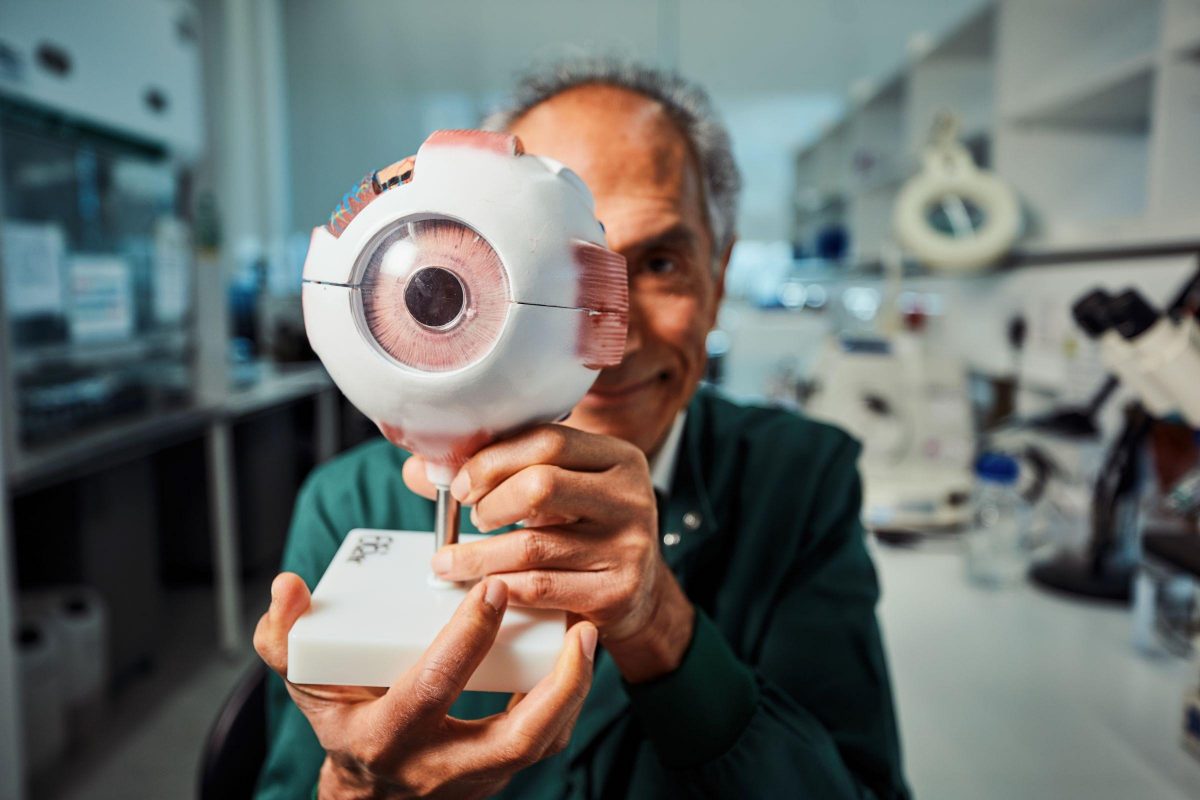
Professor Baljean Dhillon (credit: Andrew Perry)
A Scottish research initiative to safeguard retinal images for innovation in eye research has reached a major milestone.
Having secured more than one million retinal images since the project launched, researchers are now a step closer to supporting clinicians to make crucial early diagnoses in debilitating eye diseases and other conditions.
Originally funded by the Royal College of Surgeons of Edinburgh, Sight Scotland, Fight for Sight, NHS Lothian Charity, the Chief Scientist Office and the RS Macdonald Charitable Trust – the Scottish Collaborative Optometry-Ophthalmology Network eResearch (SCONe) was set up in 2020 as a joint initiative by the University of Edinburgh and Glasgow Caledonian University.
The project allows researchers to discover new information about eye and general diseases, such as age-related macular degeneration (AMD), glaucoma, cardiovascular disease and dementia.
The SCONe resource has now delivered more than one million retinal images from optometry practices around Scotland to Public Health Scotland’s National Safe Haven, a secure data environment for clinical research.
One of the key aims in the creation and growth of the SCONe repository is to safeguard retinal images captured in community optometry practices to be used as a clinical research resource for improving public health across the population.
Professor Baljean Dhillon, one of the founders of the SCONe project, said: “This innovative project will undoubtedly improve public health and fast track vital healthcare research. One of the many benefits of the repository comes from the presence of many images without or before clinical diagnosis.
“With the repository including representation from 10 of the 14 health board areas in Scotland, the secured data, in conjunction with the latest advances in artificial intelligence for medical image analysis, are extremely valuable for developing new diagnostic tools and refining important time points in clinical care pathways where there is a need for monitoring, referral and intervention.
“We have focussed on data security at all stages of the process of creating this invaluable retinal image repository from collection all the way through to analysis. Inside the National Safe Haven, multiple layers of protection are in place around the use of the images, including the removal of all directly identifiable information, creating a resource which can support a wide range of research in the public benefit while people’s privacy is protected.”
At present, only current approved members of the SCONe research team have permitted access to the data within the National Safe Haven.
However, in conjunction with Public Health Scotland and Research Data Scotland, researchers are now working towards a mechanism to allow tightly controlled, secure access to the repository for strictly approved and appropriately qualified researchers, to widen its potential to benefit the public through important and meaningful research.
Learn more about the SCONe project.
Retinal fundus photograph courtesy of the Royal College of Surgeons of Edinburgh.