Road glare report published
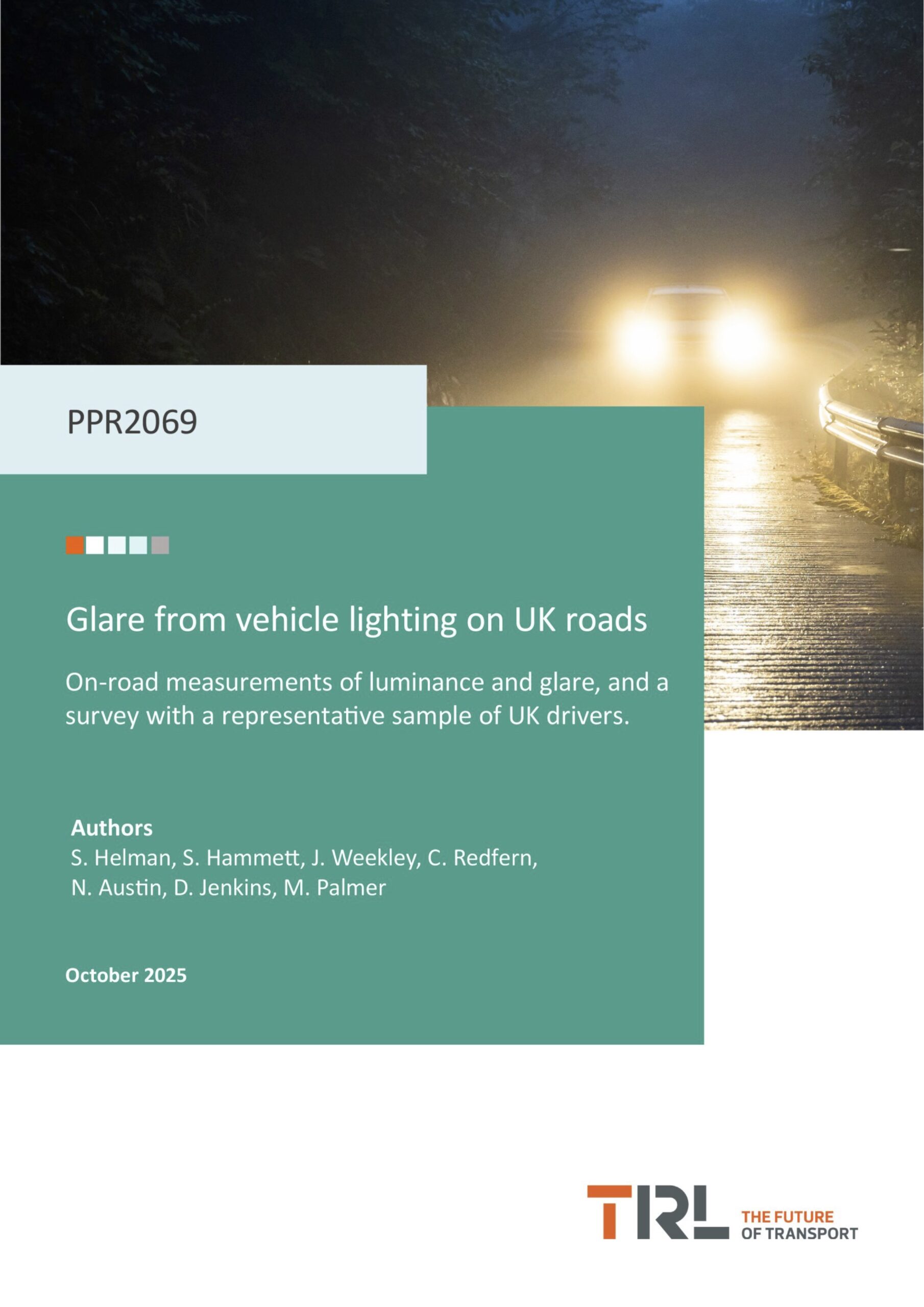
‘Whiter’ headlamps perceived as especially problematic
A government-commissioned report into headlight glare by the Transport Research Laboratory (TRL) has been published – with sector stakeholders welcoming the independent evidence into its effects on drivers’ vision.
Administered through the RAC panel, its regular survey of UK drivers, the report is based on the feedback of 1,850 people answering questions about their own experience of glare, including vehicle types and driving situations in which they suffered from its effects.
Its main findings are as follows:
- The driving public perceived glare from vehicle headlamps to be an important and widespread issue when driving at night
- Headlamps were perceived to be too bright
- ‘Whiter’ headlamps, and those on larger vehicles, were generally perceived to be especially problematic for causing glare
- More than half of drivers reported they had stopped or reduced driving at night (or would if they could) due to their perceptions of headlamp brightness
The reports concludes that “glare is therefore an issue for which action to improve the situation for the driving public would be welcomed”.
Commenting on the report, ABDO president, Kevin Gutsell, told DO Online: “The Transport Research Laboratory’s research is a welcome contribution to our understanding of the link between brighter headlights and the glare that can affect drivers’ ability to drive at night. I encourage drivers affected by this to seek out a dispensing optician at their local High Street practice. As experts in spectacle frames and lenses, dispensing opticians can advise drivers on the most appropriate eyewear, including the advanced lenses and lens coatings that can provide more confident and safe driving, particularly at night.”
The College of Optometrists has also welcomed the report, with its clinical advisor, Denise Voon, stating: “[The report] confirms what our own research has been showing for some time, that there is a link between brighter headlights and glare.
“The study also highlights that glare worsens when vehicles meet on hills or bends, and that the current UK lighting regulations, which are based on laboratory measurements of luminous intensity rather than the luminance experienced by drivers, is no longer sufficient with modern headlight technology.
“While the study identifies evidence gaps, including limited data on specific vehicle models, weather conditions and older drivers, it sends a clear signal that change is urgently needed. The challenge now is to turn this evidence into action, to update lighting standards and help ensure that everyone can drive safely and confidently after dark.
“We look to the DfT [Department for Transport] to take immediate, actionable steps to support drivers and commission more detailed research, specifically into how headlight regulations need to change, to reduce the impact of disability glare when driving at night.”