Business Bites: Leader influencing
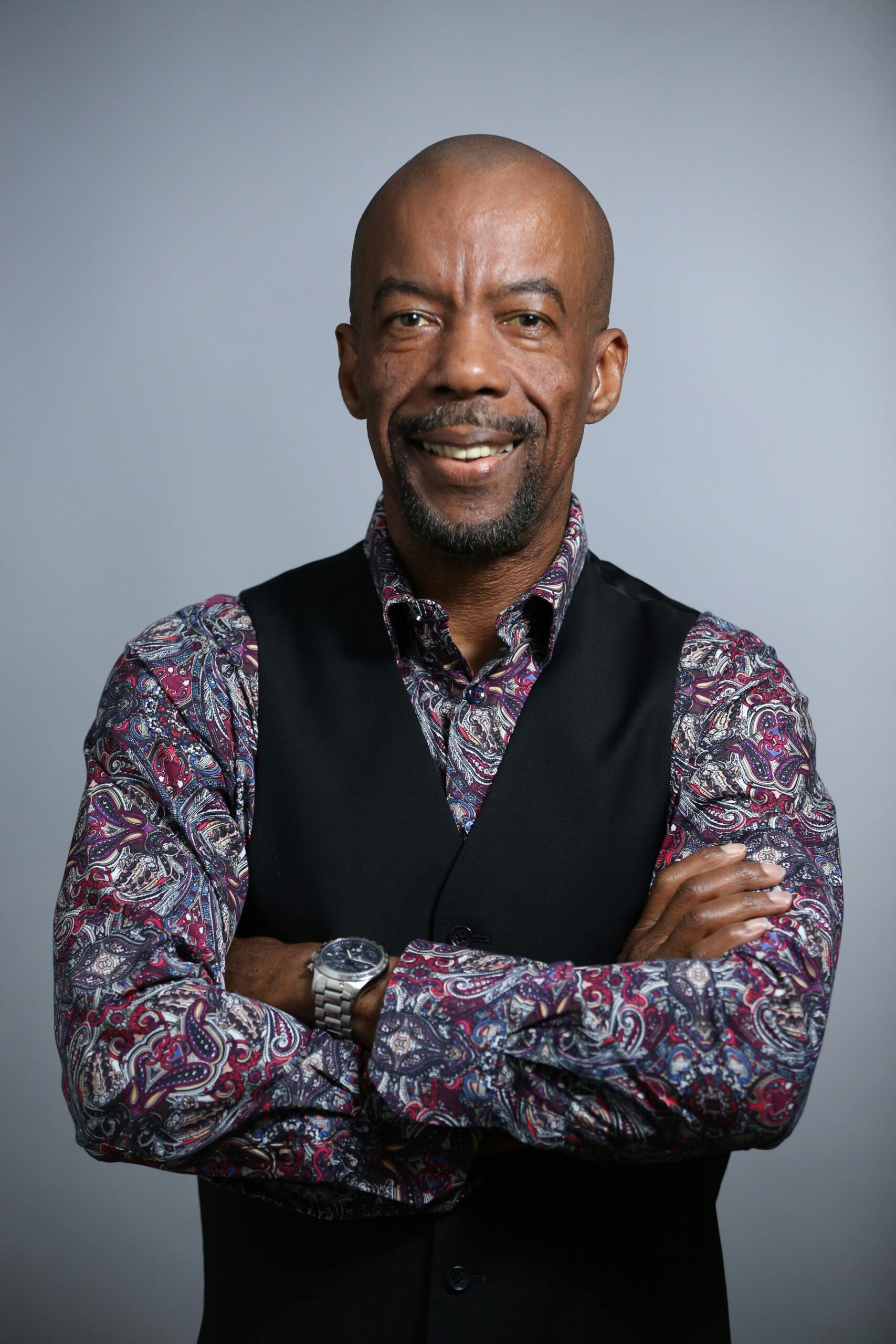
It’s important to utilise both verbal and non-verbal techniques
A ‘leader influencer’ is a person who uses their ability to persuade and inspire others to guide them toward a shared goal.
In the World Economic Forum article, ‘Wave goodbye to command culture. Here’s how today’s leaders can influence and make change’, we hear how Florian Hoffman endorses a more genuine and straightforward approach to leadership, and that business leaders can take inspiration from the more approachable, candid style of influencers.
Verbal influencing techniques
Spoken influence involves the conscious use of words that are used and the way that those words are said. Effective verbal techniques include:
1. Strategic use of language
Leader influencers know how to use positive and inclusive language to gain buy-in. Words such as ‘we’, ‘together’ and ‘achieve help promote collaboration.
2. Questioning techniques
To influence using closed questions, you can guide a person toward a desired outcome by asking questions that elicit a specific, often yes/no or short, factual answer, which can clarify details, confirm understanding, steer a conversation or check commitment. While closed questions are excellent for efficient, focused communication and data gathering, they are less effective for building rapport and exploring complex issues. For those areas, open-ended questions are better.
3. Framing and reframing
The framing of an issue steers perception. Strategic leaders learn to reframe challenges as opportunities, shifting narratives from negative to positive thereby driving constructive action.
4. Storytelling
Stories capture attention, stimulate emotions and make notional concepts recognisable. Leaders often use storytelling to connect, persuade and inspire. A good narrative can drive engagement more than data alone.
5. Assertive communication
Assertiveness means expressing one’s views clearly and respectfully without being aggressive. It signals confidence and earns respect. This is critical in decision-making, conflict resolution and negotiation.
Non-verbal communication and influence
Non-verbal communication is highly important and knowing how to utilise non-verbal signals effectively is a key leadership skill.
It is accepted that non-verbal communication is extremely influential and non-verbal signals including body language, eye contact, tone of voice and rapidity of speech, can have a subtle but significant influence. For leaders in a professional context, there is no exception.
Albert Mehrabian, professor emeritus of psychology at the University of California, is best known for his research into the relative importance of verbal and non-verbal messaging.
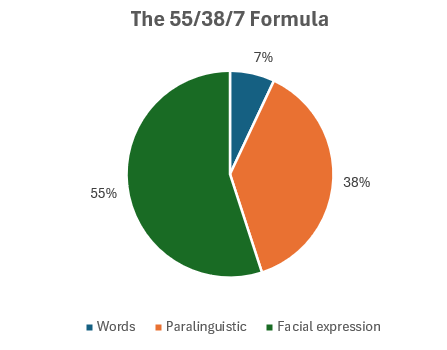 Here is a more precise representation of Mehrabian’s findings than is typically cited:
- Seven per cent of message pertaining to feelings and attitudes is in the words that are spoken
- Thirty-eight per cent of message pertaining to feelings and attitudes is paralinguistic (the way that the words are said)
- Fifty-five per cent of message pertaining to feelings and attitudes is in facial expression
Individuals are often not conscious of their body language and facial expressions. There are behaviours a person can tweak to improve their communication skills. A smile and just the right amount of eye contact can help you effectively convey information during first impressions.
Hand gestures not only express your thoughts but also convey your enthusiasm and passion for a topic.
Body language can provide insight into a person’s emotional state. For example, you probably already know that someone who crosses their arms is guarded or discontent even when they claim they are not.
According to Dr Jeff Thompson, we can interpret nonverbal signals more readily by remembering the three Cs of nonverbal communication: context, clusters and congruence.
He writes: “Context includes what environment the situation is taking place in, the history between the people, and other factors such as each person’s role (for example, an interaction between a boss and employee). Looking for nonverbal communication gestures in clusters prevents us from allowing a single gesture or movement to be definitive in determining a person’s state of mind or emotion. Using not one but multiple expressions or movements to influence our interpretation of a person’s body language Finally, congruence – do the spoken words match the tone and body language? After someone falls, and they verbally state they are fine, however, their face is grimacing and their voice is shaky, you might want to probe a little deeper.”
Importance in leadership
Communication is without doubt the bedrock of effective leadership. However, influencing others is not purely based on what we say, but also how we say it, and what we communicate without words. The ability to utilise both verbal and non-verbal influencing techniques is critical for professionals in leadership roles.
Combining verbal and non-verbal influence
Having already examined the important facets of both verbal and non-verbal influencing skills, it’s probably no surprise to say that for real impact it is essential to utilise both styles. As we read in the 3 Cs, inconsistencies between words and body language create confusion and erode trust.
Practice consistency between language, tone, and body cues to enhance authenticity and reinforce messages. Influential leaders consciously align these elements to build rapport, command attention and convey commitment.
Other useful articles
Segal J et al. Body language and non-verbal communication. November 2025. HelpGuide.org
Zadeh S. Non-verbal communication and influence. Six tips to make a great impression. 2020. Blog.