“Carry the flame” says BCLA president
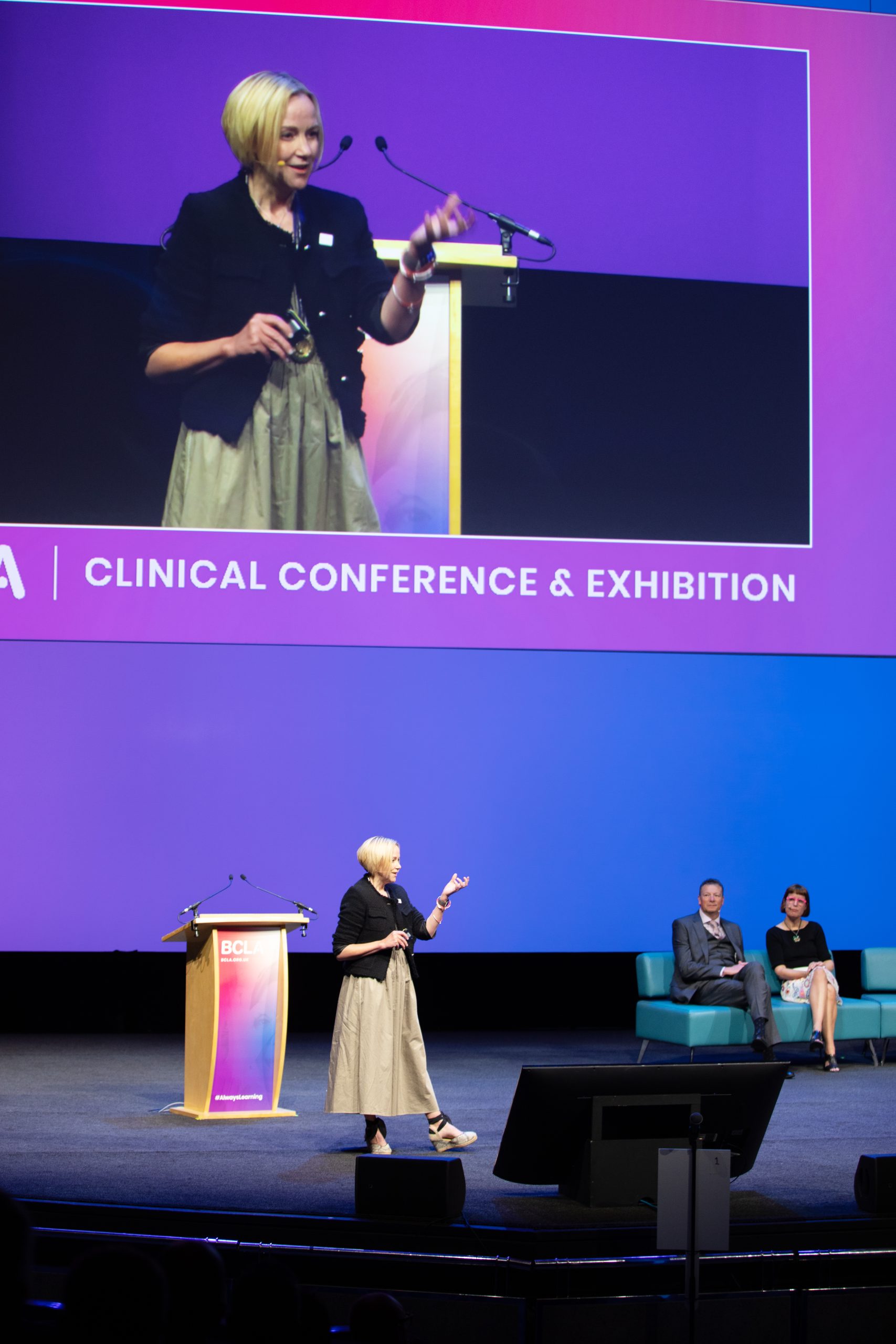
BCLA president, Sarah Farrant, opens the conference
Eyecare professionals (ECPs) attending the BCLA Clinical Conference and Exhibition in Birmingham last week have been urged to “carry the flame” of academic excellence and use it to deliver improved patient care.
Speaking during this year’s conference, BCLA president Sarah Farrant praised the “professional curiosity” of members and encouraged them to “ask questions and challenge assumptions”.
She said: “This room is full of the sharpest minds in our profession, blending a burning passion for science and patient care. We are inspired by what we know and what we can do. I ask you all to take that fire of academic excellence and carry it for the people who trust us with their eyes.”
The findings of the TFOS DEWS III were shared publicly for the first time at the event, with Professors James Wolffsohn, Lyndon Jones and Fiona Stapleton, and associate professor Jennifer Craig, presenting the outcomes of the study. Featuring an updated definition and a streamlined diagnostic process, the report provides a new treatment algorithm to follow based on the latest available evidence drawn from global research. Broken down into three key sections, the report aims to provide ECPs with clear guidance to follow to establish if patients have dry eye disease, find out what’s causing it, and outline the best ways to manage it.
This year’s conference made a point of championing the patient voice, and several patients were given the opportunity to tell their stories and outline their experiences of living with conditions including dry eye disease and myopia.
New BCLA chief executive, Brad Parkes, said: “As a profession we are incredibly fortunate to have so many incredible speakers from the worlds of research and academia able to share their findings with clinicians working in everyday practice. We want everyone attending to evolve their day-to-day practice based on what they have heard over the three days to make it more evidence-based and patient-centric, offering science-informed clinical management. That is the gold standard and that is what we need to be aiming for as a profession day in, day out.”
The advance of AI came under the microscope, with delegates hearing how the technology is being used to help ECPs maximise chair-time by triaging low-level enquiries, improve record-keeping and simplify complex algorithms for recommended treatment pathways.
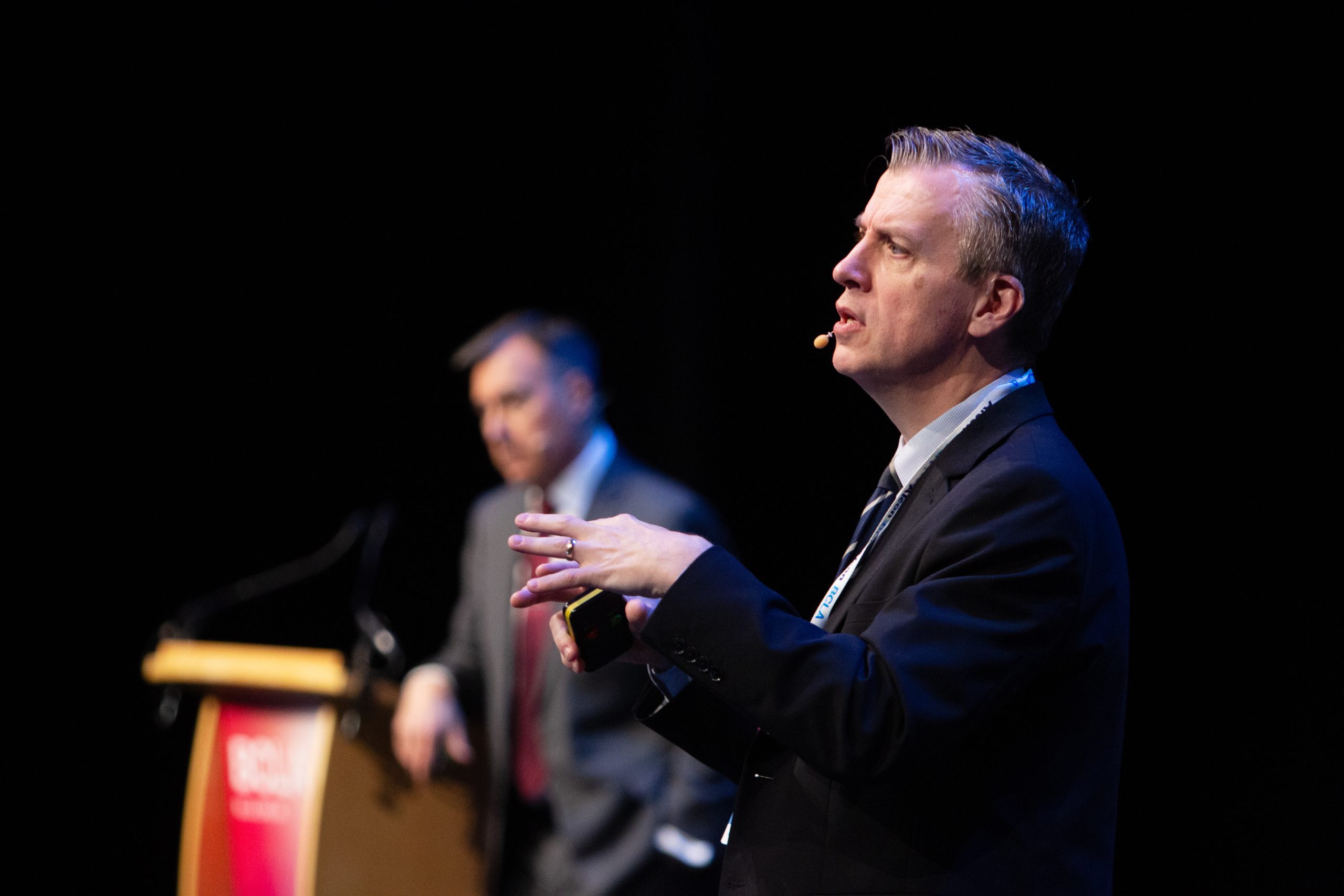
Professor Phil Morgan speaking, with Professor Lyndon Jones
Sarah Farrant, who chaired the AI session, said: “AI challenges us to push beyond our boundaries of comfort and change the way we practice, but with change comes responsibility. We need to know how to use it ethically and effectively for the clinical benefit of our patients. Those of us who harness it wisely will help reshape the standards of care.”
This year’s Irving Fatt Memorial Lecture, delivered by Rachel Casemore, discussed the risk factors, clinical signs and biomarkers for dry eye disease in young adults. She compared ocular surface characteristics, tear proteins, cytokines, and meibum composition in 50 young adults with and without dry eye disease, exploring any associations with lifestyle factors, and determining the extent of progression after one year.
Further keynotes saw Nick Rumney reveal how his 40 years of clinical experience has helped to detect and manage anterior eye inflammation, while Professor Phil Morgan explored the evidence around contact lens dropout rates and discussed what ECPs can do about it, acknowledging that “95 per cent of people around the world who need vision correction currently don’t wear contact lenses”.
With multiple reasons cited for discontinuations, the session focused on discomfort, vision, handling and ocular health – highlighting techniques ECPs can employ to reduce drop-out rates such as a proactive approach to communication.
The programme also featured live demonstrations and practical hands-on workshops showcasing the latest techniques in scleral lens fitting, taking eye impressions, anterior eye imaging and opto-cosmetics.
The contact lens and anterior eye debates saw a host of big-name speakers discuss topics including whether contact lenses are the best option for presbyopic patients, if AI will replace the eyecare profession within the next decade, and whether independent prescribing rights are essential in modern community practices.
The event also included BCLA Celebrates’– a sold-out awards night celebrating the talent of ECPs.
Etty Bitton was named Dry Eye Practitioner of the Year, Indie Grewal landed Myopia Management Practitioner of the Year, Madhumathi Subramanian won the award for Hospital Optometry Practitioner of the Year, and the BCLA Industry Award went to Eaglet Eye.
The BCLA Da Vinci Award was handed to Julia Bodas-Romero, while Antonio Calossi won the Diane Gould photography competition and Mizuki Hashimoto was named the winner of the poster competition. A total of 23 new BCLA Fellows were also inducted.
The BCLA Medal was to be awarded to Shehzad Naroo, but will be held over until 2027 as he was on Hajj Pilgrimage. Two Medal addresses will be delivered at the next conference, when the BCLA will mark its 50th anniversary.