“Life changing” gene therapy for blind children
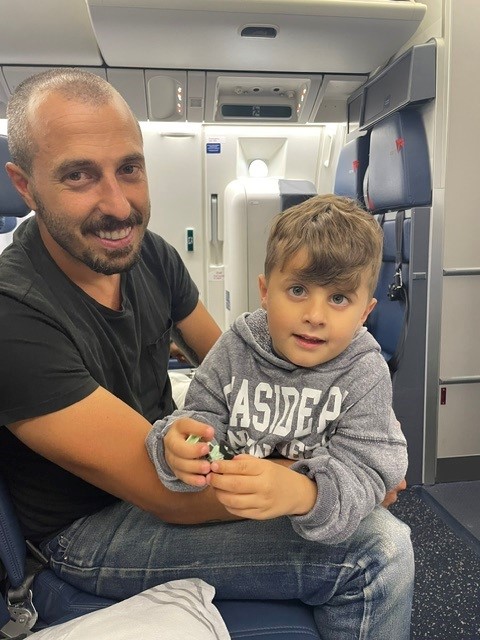
Jace, one child who received gene therapy, with his father Brendan
Experimental genetic medicine has helped four toddlers to gain “life-changing” improvements in sight, say doctors at Moorfields Eye Hospital and UCL Institute of Ophthalmology.
The children were born with a severe sight impairment, only able to distinguish between light and darkness. A rare deficiency in the AIPL1 gene caused the retinal cells to malfunction and die. The new treatment is designed to enable these cells to work better and to survive longer.
The procedure, developed by UCL scientists, involves injecting healthy copies of the gene into the retina through keyhole surgery. The copies, contained inside a harmless virus, penetrate the retinal cells and replace the defective gene.
To mitigate any potential safety issues, the children received the therapy in one eye only. All four saw remarkable improvements in the treated eye over the following three to four years, but lost sight in their untreated eye.
DJ, the mother of one child, said: “After the operation, Jace was immediately spinning, dancing and making the nurses laugh. He started to respond to the TV and phone within a few weeks of surgery and, within six months, could recognise and name his favourite cars from several metres away; it took his brain time, though, to process what he could now see.
“Sleep can be difficult for children with sight loss, but he falls asleep much more easily now, making bedtimes an enjoyable experience.”
Gene therapy for another form of genetic blindness, RPE65 deficiency, has been available on the NHS since 2020. These new findings offer hope that children affected by both rare and more common forms of genetic blindness could benefit from genetic medicine.
The clinical team is now exploring how to make the treatment more widely available. Professor Michel Michaelides, consultant retinal specialist at Moorfields Eye Hospital and professor of ophthalmology at UCL, said: “We have, for the first time, an effective treatment for the most severe form of childhood blindness, and a potential paradigm shift to treatment at the earliest stages of the disease.
“The outcomes for these children are hugely impressive and show the power of gene therapy to change lives.”
Professor James Bainbridge, consultant retinal surgeon at Moorfields and professor of retinal studies at UCL, said: “Sight impairment in young children has a devastating effect on their development. Treatment in infancy with this new genetic medicine can transform the lives of those most severely affected.”
- For more details, see The Lancet