Summer examination bookings are now closed, we are working to create the examination timetables and dates will be communicated to all learners by 30 April.
Infection control
Infection Control
R4.1.1 Dispensing opticians have a professional responsibility to apply appropriate infection prevention and control procedures in line with this guidance and any relevant local policies. They must also ensure that all waste generated in the course of practice is segregated, stored and disposed of safely, lawfully and in accordance with applicable waste regulations and practice procedures.
R4.2.1 It is in the best interests of both patients and practitioners to minimise the risk of transmission of infection within optical practice. Dispensing opticians should maintain high standards of hygiene and consistently apply appropriate infection prevention and control measures to prevent the transmission of infection between practitioner and patient, and between patients.
R4.3.1 Infection risk and transmission
Infection is a recognised risk within healthcare provision and may arise from direct contact, contact with body fluids, or exposure to airborne particles. Patients may present to optical practice with infectious conditions knowingly or unknowingly, and there is a risk of transmission between patients, practitioners and the practice environment if appropriate infection prevention and control measures are not applied. Practitioners themselves may also pose a risk of transmission if unwell or colonised with infectious organisms.
R4.3.2 Risk in optical practice
The overall risk of infection transmission in optical practice is low compared with some other healthcare settings. However, the close proximity (often less than one metre) between practitioners and patients during examinations and procedures increases the potential for transmission of respiratory, skin and ocular infections. Ophthalmic infections, including bacterial and viral conjunctivitis, may be transmitted where infection control measures are inadequate.
R4.3.3 Blood-borne and other infections
Transmission of blood-borne viruses such as HIV and hepatitis B and C is extremely unlikely in routine optical practice, as the principal risk arises from invasive procedures involving sharps injuries. More commonly encountered risks include transmission of skin infections (for example staphylococcal or herpetic infections), respiratory infections, enteric infections and ocular infections. Effective hand hygiene and environmental cleanliness remain the primary means of prevention.
R4.3.4 Antimicrobial-resistant organisms
Particular attention has been given in recent years to infections caused by antimicrobial-resistant organisms such as meticillin-resistant Staphylococcus aureus (MRSA) and Clostridioides difficile (C. diff). Defence against these infections, as with most others, relies primarily on rigorous hand hygiene, appropriate use of personal protective measures where indicated, and effective cleaning and decontamination of equipment and environments.
R4.3.5 Prion disease
The theoretical risk of transmission of prion proteins associated with Creutzfeldt-Jakob Disease (CJD) and variant CJD (vCJD) through the re-use of ophthalmic devices and trial contact lenses has been identified by the Department of Health. There is currently no evidence that such transmission has occurred in optical practice. Nevertheless, where re-use of devices is unavoidable, appropriate decontamination procedures must be followed to minimise any potential risk.
R4.3.6 Legal and organisational responsibilities
Under the Health and Safety at Work etc. Act 1974, employers have a duty to provide a working environment that is safe and without risks to health. Effective infection prevention and control procedures are therefore essential to protect staff, patients and visitors, and to ensure that legal obligations are met.
R4.3.7 Scope of this guidance
This guidance is intended for dispensing opticians working in general practice and community settings. Dispensing opticians working within hospital environments must follow the infection prevention and control policies and procedures of their employing Trust or organisation.
R4.4.1 General principles
A wide range of equipment used in optical practice comes into contact with patients, including items that contact intact skin, mucous membranes or ocular tissues. Inadequate cleaning or decontamination of such equipment may result in the transmission of infection. All equipment must therefore be appropriately cleaned and, where necessary, disinfected or sterilised according to its intended use and level of patient contact.
To be effective, all items must be physically clean before undergoing any disinfection or sterilisation process.
R4.4.2 Levels of decontamination
There are three recognised levels of decontamination:
1) Cleaning
The removal of organic and inorganic material from surfaces that may support microorganisms or reduce the effectiveness of subsequent disinfection or sterilisation. Cleaning is commonly achieved using detergents and water and may be supported by mechanical or ultrasonic methods.
2) Disinfection
A process that reduces the number of viable microorganisms but does not necessarily eliminate bacterial spores or some viruses. Disinfection may be achieved by physical means (such as heat) or by chemical disinfectants. The effectiveness of chemical disinfection depends on the agent used, the organism present and the duration of exposure.
3) Sterilisation
A process that eliminates all forms of microorganisms, including spores. Sterilisation may be achieved using recognised methods such as moist heat (autoclaving), dry heat, chemical sterilants, filtration or other validated processes appropriate to the equipment being treated.
R4.4.3 Categorisation of equipment
Not all equipment requires sterilisation prior to use. As a general guide:
Sterile
Equipment introduced into a sterile body area or used where there is a break in the skin or mucous membrane.
Disinfected
Equipment in close contact with intact mucous membranes, including the ocular surface (for example tonometer heads, gonioscopes and contact lenses).
Clean
Equipment that does not come into close contact with mucous membranes or sterile body areas (for example trial frames and refractor heads).
R4.4.4 Clinical environment
Surfaces within consulting and clinical areas should be cleaned regularly using detergent and water. Where surfaces are contaminated with blood or other body fluids, an appropriate chlorine-based disinfectant should be used in accordance with manufacturer and safety guidance.
All consulting rooms should have access to handwashing facilities, and it is good practice for a wash-hand basin to be located within or immediately adjacent to the consulting room.
R4.5.1 Importance of hand hygiene
Hand hygiene is the single most important measure in preventing the transmission of infection in optical practice. The skin normally carries resident organisms (skin commensals), which are usually harmless, and transient organisms, which may be acquired through contact with patients, equipment or the environment and may cause infection. Effective hand hygiene significantly reduces the risk of cross-infection between patients and practitioners.
R4.5.2 When hand hygiene should be performed
Hand hygiene should be performed at appropriate points during clinical practice, including but not limited to:
– Before and after direct patient contact
– Before and after contact lens insertion or removal
– Before and after contact with the ocular surface or adnexa
– Before and after administering medications (for example eye drops)
– After contact with body fluids, wounds or clinical waste
– After handling soiled or contaminated materials
– After using the toilet
– When hands are visibly dirty
– Before donning and after removing gloves
There is no fixed frequency for hand hygiene; the need is determined by clinical activity and risk of contamination.
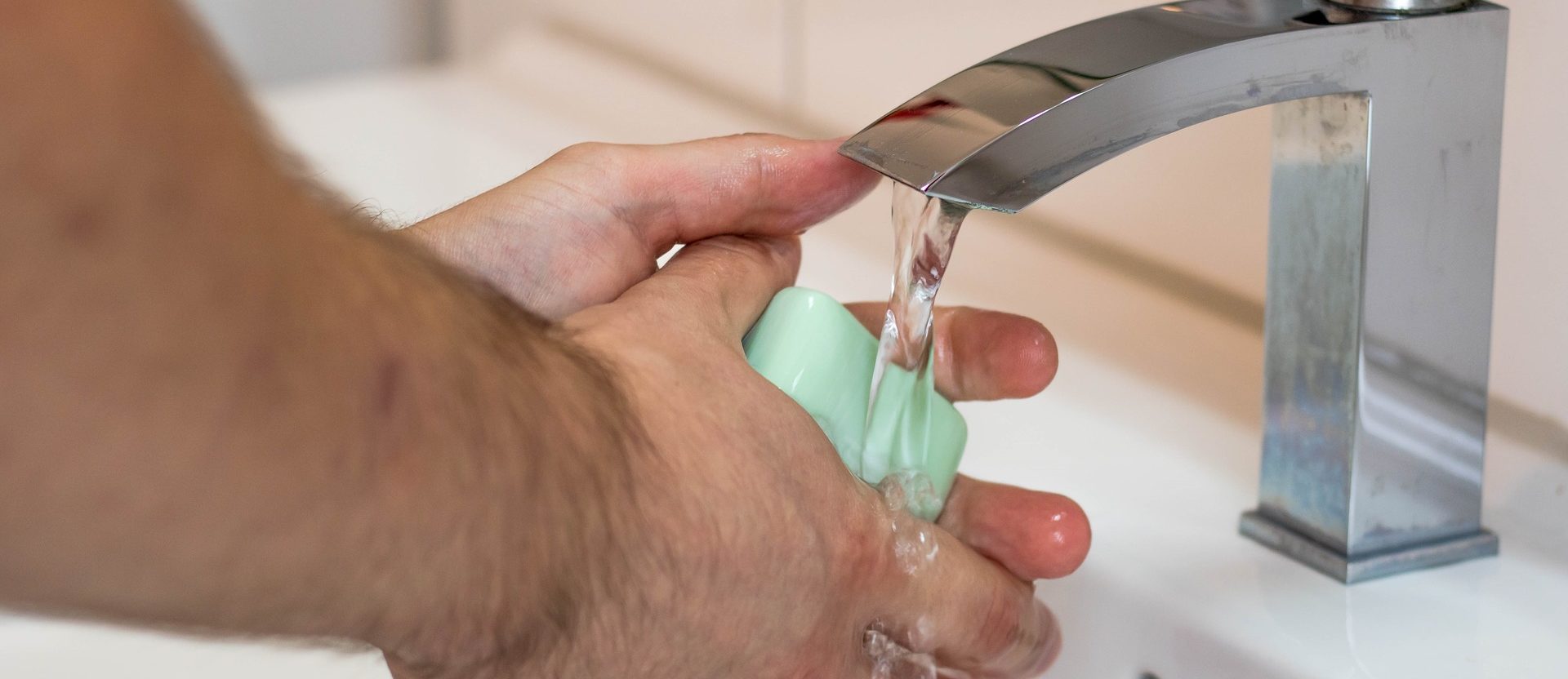
R4.5.3 Hand hygiene technique
For most routine clinical procedures, handwashing using the following technique is sufficient:
1) Wet hands under running water
2) Apply liquid soap or antiseptic preparation (bar soap should not be used)
3) Rub hands thoroughly, covering all surfaces, for approximately 10–15 seconds
4) Rinse thoroughly under running water
5) Dry hands using a disposable paper towel
The use of non-disposable towels is not recommended in clinical settings.
R4.5.4 Skin care and integrity
Frequent handwashing and use of alcohol-based hand preparations may damage the skin. Damaged or cracked skin may harbour microorganisms and increase the risk of infection transmission. To reduce this risk:
– Soap should be applied to wet hands to minimise irritation
– Hands should be dried thoroughly after washing
– Regular use of hand cream is recommended
– Shared jars of hand cream should not be used
– Cuts or breaks in the skin should be covered with an impermeable waterproof dressing
R4.5.5 Guidance and standards
National guidance recommends that hands are decontaminated immediately before and after each episode of direct patient contact and after any activity that may result in contamination. Practitioners should follow recognised guidance on hand hygiene technique, including that issued by the National Institute for Health and Care Excellence (NICE) and the World Health Organization (WHO).
R4.6.1 Soap and water
Handwashing with liquid soap and water is effective in removing most transient microorganisms and is usually sufficient to prevent cross-infection in routine optical practice. In clinical areas, soap should be supplied as liquid soap in disposable containers or containers that are cleaned and dried before refilling. Soap containers should not be “topped up”.
Handwashing with soap and water must be used when hands are visibly dirty or contaminated with blood, bodily fluids or other potentially infectious material.
R4.6.2 Antiseptic handwashing agents
Antiseptic handwashing agents (for example chlorhexidine or povidone-iodine preparations) are more effective than soap alone at reducing both transient and resident microorganisms. Chlorhexidine preparations demonstrate a residual antimicrobial effect and may be particularly appropriate:
– Before and after direct patient contact in settings where antimicrobial-resistant organisms are present (for example residential or nursing homes)
– Where there is heavy microbial contamination
– Before performing invasive procedures or minor operations
R4.6.3 Alcohol-based hand rubs
Alcohol-based hand rubs are effective antiseptic agents that rapidly reduce microbial load on the skin and can improve compliance with hand hygiene. To be effective against staphylococci, including MRSA, hand rubs should contain approximately 70% ethyl or isopropyl alcohol.
Alcohol-based hand rubs are not cleaning agents and should not be used if hands are visibly dirty or contaminated with blood or bodily fluids. In such circumstances, hands must be washed with soap and water.
Alcohol hand rubs are particularly useful where handwashing facilities are limited, such as during domiciliary visits or between patient contacts. When used prior to contact lens handling, unperfumed alcohol-based hand rubs have been shown to have negligible effects on ocular comfort, redness or lens wettability, provided they are allowed to dry fully in accordance with the manufacturer’s instructions.
Alcohol-based hand rubs are not effective against Clostridioides difficile spores or norovirus. Good handwashing with soap and water is therefore strongly advised at the start and end of clinical sessions and whenever contamination is suspected.
R4.6.4 Skin protection and technique
Frequent handwashing and use of alcohol-based products may damage the skin, increasing the risk of infection transmission. Practitioners should take steps to maintain skin integrity, including thorough drying of hands and the regular use of hand cream. Shared jars of hand cream should not be used.
Practitioners should follow recognised handwashing and hand-rubbing techniques, including those published by the World Health Organization.
R4.7.1 Risk of airborne transmission
Potentially infectious respiratory droplets and aerosols are generated when individuals cough, sneeze or speak. Larger droplets tend to settle quickly and may contaminate mucous membranes such as the eyes, nose and mouth, while smaller particles may remain airborne for longer and travel greater distances. Environmental factors, including airflow, temperature and humidity, influence the transmission of airborne infections.
Because dispensing opticians work in close proximity to patients’ faces, there is an increased risk of airborne transmission of respiratory infections between practitioners and patients if appropriate precautions are not taken.
R4.7.2 Common airborne infections
Infections transmitted primarily via droplets or aerosols include respiratory illnesses such as the common cold and influenza. The risk of transmission in optical practice is generally low, but increases when patients or practitioners are symptomatic, particularly in enclosed clinical environments.
R4.7.3 Measures to reduce risk
The risk of airborne infection can be reduced by applying basic respiratory hygiene measures, including:
– Encouraging individuals who are coughing or sneezing to cover their nose and mouth using a tissue
– Prompt disposal of used tissues into an appropriate waste receptacle
– Performing hand hygiene after coughing, sneezing or contact with respiratory secretions
– Avoiding unnecessary touching of the eyes, nose or mouth unless hand hygiene has been performed
– Practices should ensure adequate ventilation within clinical areas where practicable
R4.7.4 Use of masks
Evidence regarding the routine use of masks in preventing airborne transmission during normal ophthalmic and optical examinations is limited. National guidance has not demonstrated a clear benefit for the routine use of surgical face masks in standard clinical procedures.
Routine mask use is therefore not required in optical practice unless there is a specific and identified respiratory risk, such as suspected or confirmed airborne infectious disease, or during epidemic or pandemic situations in line with national or local guidance.
R4.7.5 Professional judgement
Dispensing opticians should exercise professional judgement when assessing the risk of airborne infection, taking account of patient symptoms, local prevalence of infection, practice environment and any current public health guidance. Where required, additional protective measures should be implemented in line with employer or organisational policies.
R4.8.1 Overview
Meticillin-resistant Staphylococcus aureus (MRSA) is a strain of Staphylococcus aureus that is resistant to multiple antibiotics and may be more difficult to treat than non-resistant strains. S. aureus commonly resides on the skin or in the nasal passages of healthy individuals and may be present without causing illness. Individuals may be infected or colonised, sometimes unknowingly, for prolonged periods.
Although serious MRSA infection is less common in community and optical practice settings than in hospitals, transmission may occur, particularly among vulnerable or at-risk patients. Effective infection prevention and control measures are therefore justified.
R4.8.2 Transmission and risk
MRSA does not penetrate intact skin and the risk of infection to healthy clinical staff is considered low when appropriate infection control measures are followed. Transmission may occur through direct contact or via contaminated hands, equipment or environmental surfaces. MRSA can survive for extended periods on dry surfaces and may be transferred readily through contact with frequently touched items such as equipment, door handles, keyboards and work surfaces.
R4.8.3 General infection control measures
Hand hygiene is the single most important intervention in preventing the transmission of MRSA and other transmissible infections. Dispensing opticians should perform hand hygiene before and after each patient contact, after contact with potentially contaminated equipment or surfaces, and after removing gloves.
Appropriate cleaning and decontamination of equipment and the clinical environment must be undertaken in accordance with the principles set out in this guidance.
R4.8.4 Personal protective measures
The use of gloves should be based on an assessment of infection risk. Gloves are recommended where there is a likelihood of contact with blood, body fluids, non-intact skin, mucous membranes or contaminated materials. Gloves do not replace the need for effective hand hygiene, which must be performed before donning and after removing gloves.
When deciding whether gloves are required, practitioners should consider:
– The presence of overt infection (for example acute conjunctivitis or ulcerative blepharitis)
– The likelihood and degree of contact with body fluids or infected tissue
– The potential consequences of infection transmission
– The risk of latex sensitivity or allergy
Routine use of gloves is not required for standard ophthalmic examinations or contact lens fitting where there is no risk of contact with bodily fluids.
R4.8.5 Equipment and environmental contamination
Equipment and instruments that come into contact with patients known or suspected to be infected or colonised with MRSA must be cleaned, dried and, where appropriate, disinfected after use. Alcohol-based cleaning agents may be suitable for some equipment; however, practitioners should follow manufacturer guidance, as certain materials (including some rubberised finishes) may be damaged by alcohol.
Environmental surfaces should be cleaned regularly, as they may act as reservoirs for MRSA and other organisms.
R4.8.6 Community and non-clinical settings
Situations where patients or practitioners spend prolonged periods in close proximity—such as care homes, residential settings, schools or workplaces—may increase the risk of transmission of infectious organisms. The principles set out in this section apply equally in such settings and should be adapted in line with local policies.
Dispensing opticians undertaking domiciliary or community visits should follow infection control procedures specific to the environment and use hand hygiene facilities provided, including hand gels where appropriate.
R4.8.7 Professional judgement and proportionality
In all cases, dispensing opticians should apply infection control measures proportionately, based on an assessment of risk. Effective hand hygiene, appropriate use of protective measures and thorough cleaning of equipment and environments remain the primary defences against the transmission of MRSA and other transmissible infections.
R4.9.1 General principles
Contact lens care products and ophthalmic medicines used during clinical examinations may become contaminated and act as a source of cross-infection if not handled, stored and discarded appropriately. Dispensing opticians must therefore ensure that all such products are maintained and used in accordance with manufacturer instructions and good infection prevention practice.
R4.9.2 Use and storage of multidose containers
Multidose containers, including bottles of contact lens solutions and ophthalmic medicines, present a particular risk of contamination. Dispensing opticians should:
– Record when multidose containers are first opened
– Discard products in accordance with manufacturer guidance, which may vary depending on the product and its intended use
– Avoid contact between the dropper tip and any surface, including the eye or eyelids
– Replace caps immediately after use
If contamination is suspected, the product must be disposed of immediately.
R4.9.3 Single-use preparations
Where possible, single-use drug delivery systems and solutions should be used in preference to multidose containers to minimise the risk of cross-infection.
R4.10.1 General principles
Wherever practicable, contact lenses and ophthalmic devices that come into contact with the ocular surface should be used for a single patient only. Re-use may expose patients to unnecessary risk through the transmission of infection and should be avoided unless there is a clear clinical justification.
Where single-use is impracticable, re-usable items must be decontaminated using a recognised and effective method appropriate to the level of risk and the material involved.
R4.10.2 Prion disease risk and professional judgement
There are no confirmed cases of transmission of Creutzfeldt-Jakob Disease (CJD) or variant CJD (vCJD) via contact lenses or ophthalmic devices. However, a remote theoretical risk of prion transmission through re-use of devices contacting the eye has been identified by the Department of Health and subsequent advisory groups.
Current evidence indicates that the anterior eye and ocular surface present a low potential for prion infectivity. Nevertheless, prion proteins are resistant to many standard disinfection methods and adhere strongly to surfaces. Effective cleaning prior to disinfection is therefore critical in reducing any potential risk.
Dispensing opticians should balance the benefits of using contact lenses or ophthalmic devices against any potential risk and apply appropriate decontamination procedures where re-use is unavoidable.
R4.10.3 Identified higher-risk patient groups
Although the risk of prion transmission remains theoretical, certain patient groups have been identified as having a higher than normal risk of developing classical CJD. These include individuals who:
– Have received pituitary-derived human growth hormone or gonadotrophins
– Are known or assumed to have received human dura mater grafts
– Have been diagnosed with, or are suspected of having, CJD or have a family history of CJD
– Have undergone specific neurosurgical procedures prior to August 1992
– Have degenerative neurological disease of unknown cause
Where possible, dispensing opticians should establish whether a patient falls into one of these categories before undertaking procedures involving re-use of contact lenses or ophthalmic devices.
R4.10.4 Use of single-patient items and referral
For patients identified as being within a higher-risk group, only single-patient-use contact lenses or ophthalmic devices should be used wherever possible.
If single-use items are not available and the procedure is non-urgent, the practitioner should consider referral to the Hospital Eye Service or an alternative setting where appropriate facilities are available.
Where emergency management necessitates the use of a re-usable item for such patients, the item should be discarded immediately after use.
R4.10.5 Decontamination of re-usable lenses and devices
If a contact lens or ophthalmic device is to be re-used, it must be decontaminated and made ready for subsequent use using a recognised protocol. Essential steps include:
– Preventing the item from drying; immediate decontamination is preferable
– Thorough cleaning (including mechanical rubbing where appropriate) to remove cellular and proteinaceous debris
– Disinfection using sodium hypochlorite at an appropriate concentration
– Thorough rinsing to remove all traces of disinfectant prior to re-use
Sodium hypochlorite is toxic to ocular tissues and must be completely removed before re-use of any device.
Agents or procedures capable of fixing proteins to surfaces (for example isopropyl alcohol, glutaraldehyde or autoclaving) must not be used unless devices have first been effectively cleaned in accordance with recognised protocols.
R4.10.6 Manufacturer instructions and device limitations
Any contact lens or ophthalmic device intended by the manufacturer for single use must not be re-used. Where a device cannot withstand appropriate decontamination, practitioners must exercise professional judgement when considering its use, bearing in mind that undetected disease may have sight- or life-threatening consequences.
R4.10.7 Patient information and consent
Where a device that cannot withstand decontamination is to be re-used in a patient’s management, the risks and benefits must be explained to the patient. Patients should be given sufficient information to make an informed decision, and consent should be documented in accordance with professional guidance.
R4.11.1 Legal responsibility
Dispensing opticians have a duty of care to ensure that all waste generated in the course of professional practice is handled, stored and disposed of safely and lawfully. Under section 34 of the Environmental Protection Act 1990, any person who produces, keeps, treats or disposes of controlled waste must take all reasonable steps to prevent harm to human health or the environment.
R4.11.2 Classification of waste
Controlled waste includes waste arising from households, commerce or industry. Clinical waste is defined in the Controlled Waste Regulations 1992 and includes waste that may be hazardous or infectious, such as:
– Human or animal tissue
– Blood or bodily fluids
– Drugs and pharmaceutical products
– Swabs, dressings and contaminated materials
– Sharps, including needles and lancets
Any waste arising from medical, nursing, dental, ophthalmic or similar practice that may pose an infection risk must be treated as clinical waste unless rendered safe.
R4.11.3 Segregation and disposal
Waste must be segregated at source and disposed of using appropriate containers and waste streams in accordance with local policies and waste management arrangements. In particular:
– Clinical and hazardous waste must be stored in suitable rigid or colour-coded containers and disposed of via approved clinical waste services
– Non-hazardous healthcare waste must be disposed of in accordance with local guidance
– Sharps must be disposed of immediately after use into approved sharps containers
Dispensing opticians should ensure that waste disposal arrangements are clearly understood and followed by all staff.
R4.11.4 Common optical and ophthalmic waste (illustrative examples)
For guidance only, common optical and ophthalmic waste is typically managed as follows:
– Used or unused minims and fluorets: non-hazardous pharmaceutical waste, stored in rigid, leak-proof containers prior to incineration
– Empty contact lens solution bottles, tonometer probes and large quantities of expired contact lenses: non-hazardous healthcare waste, disposed of via the appropriate offensive waste stream
– Chloramphenicol and other specified medicines: hazardous pharmaceutical waste, requiring specialist disposal
Practitioners must follow local waste management policies and contractor guidance, which may vary between settings. Your local optical committee is usually a good source of information on companies who provide waste disposal services in you area.
R4.11.5 Good practice
The disposal of waste must be safe, environmentally responsible and compliant with current legislation. Dispensing opticians should ensure that waste management procedures are reviewed regularly and updated in line with changes in regulation or practice.
Updated January 2026