Low Vision Corner Part 7
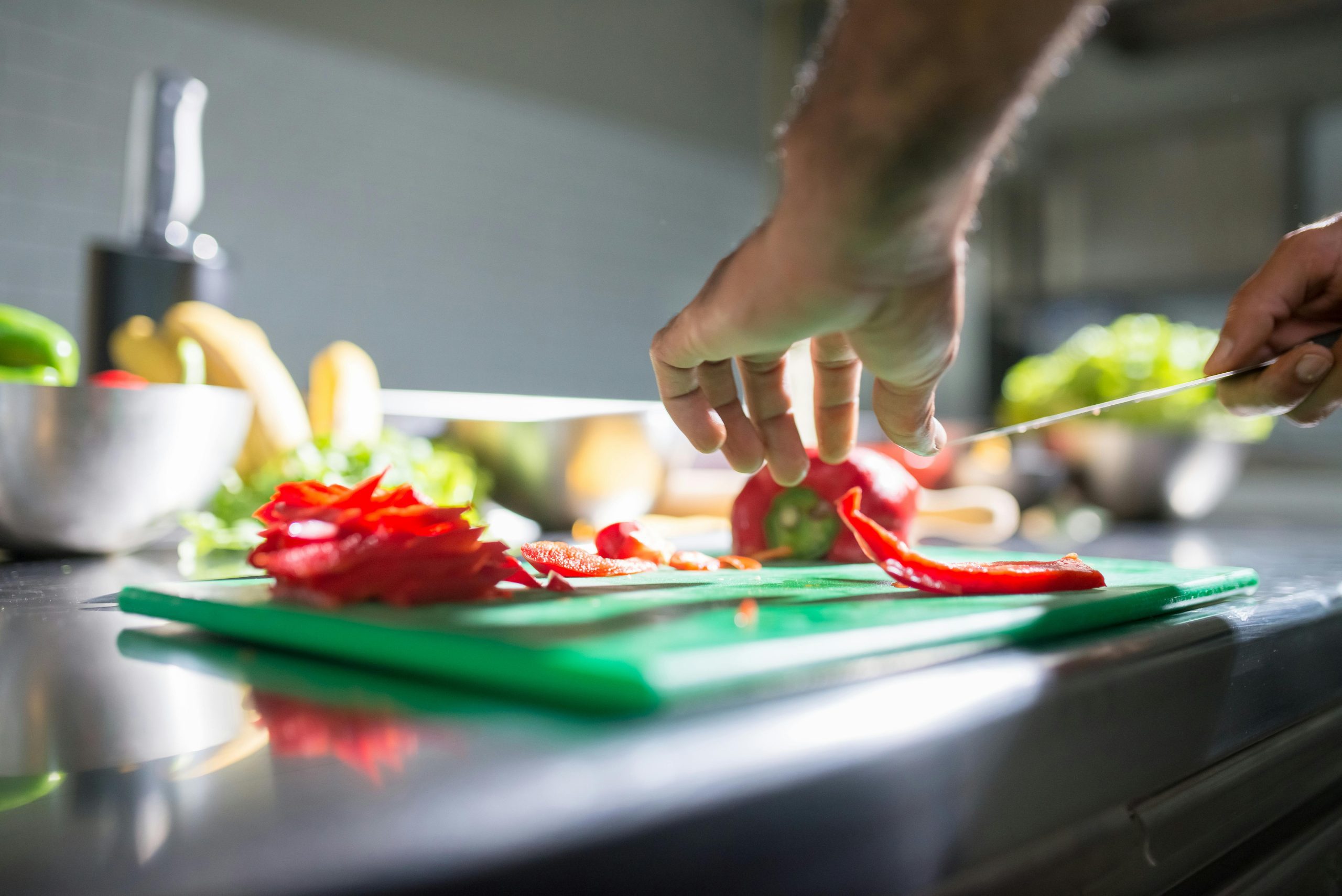
Using contrast in the home can make life easier: such as with chopping boards in the kitchen
Appropriate lighting can make a big difference to the environment and visual performance for a visually impaired person. Let’s take a look at some of the advice that can be offered to patients with visual impairment…
Research by Cornelissen et al1, found that for tasks such as recognising faces, furniture and cups, people with a visual impairment required illuminances over 1,000 times greater for optimal performance than non-impaired subjects who performed the same tasks.
However, too much glare can also cause problems, so it is important for lighting to be adaptable and adjustable, making use of dimmer switches, or switching lights separately. Keeping light levels similar in all rooms, and avoiding shadowy areas, is also important to avoid difficulties due to the prolonged adaptation times that many visually impaired people experience.
General lighting
Maximising daylight is a very helpful first step, which can be achieved fairly easily by removing any net curtains and ensuring the windows are kept clean and not obstructed by plants outside or items on the windowsill inside. A vertical blind can be used to control the direction and amount of light entering the room and reduce glare.
Artificial light can be improved by fitting higher wattage light bulbs, but the type of lampshade or light fitting can also make a difference. If the bulb is visible, it may cause glare, so spotlights are best avoided for general lighting.
Good lighting near stairs can reduce the risk of falls or trips. Lighting should be positioned so that it improves the contrast between the treads and risers, best achieved by having a light at the top and bottom of the stairs – again, ensuring it doesn’t cause glare.
Task lighting
As well as suitable general lighting, task lighting is important to maximise the available vision and improve contrast for detailed tasks such as reading, cooking, etc. A standard lamp is not suitable as a task light, as the light cannot be directed, and may cause glare. An adjustable angle poise lamp is best for reading, as all the light can be directed where it is required and can be moved closer if needed.
The light can be directed over the person’s shoulder from behind, but it is often better to position it closer, below eye level, between the person and their task. This reduces the possibility of glare and increases the illumination
Lights fitted beneath wall cupboards and over hobs in the kitchen make food preparation and cooking easier and safer. Freestanding electric lights should be avoided in the kitchen, as trailing cables could present a hazard. Task lighting could also be usefully employed in a bedroom, illuminating mirrors, and the inside of wardrobes and, of course, to facilitate reading in bed.
Outside the home
Outside the home environment, people may find difficulty with glare, and may need to wear tinted spectacles; however, this can then make near tasks more difficult as more light is needed. Photochromic lenses often don’t clear quickly enough when going from light to darker environments and can cause problems with dark adaptation. A hat with a wide brim will help to reduce glare while ensuring maximum light for near tasks.
Some visually impaired people find it useful to carry a pen torch, or other small torch in their pocket or bag to use temporarily when lighting is poor.
Contrast considerations
In addition to improving lighting, it is important to consider contrast. Things can be made easier to see by using contrasting shades, or colours that stand out against each other. There are many ways that contrast can be improved, a lot of them relatively simple, like using a black felt tip pen for writing rather than a ball point, using a white tea pot to make tea instead of a brown one, or using different coloured chopping boards for different coloured vegetables.
Around the house, contrasting shades and colours could be used for walls, floors and doors, and putting a contrasting strip at the front of steps makes them easier to see. Clear glass is very difficult for someone with reduced contrast sensitivity to see, so should be avoided. It is possible to get drinking glasses with coloured patterns on, and any glass doors can be made more visible using coloured stick-on films.
Next month we will explore sight substitution methods for tasks which prove difficult.
Reference
1. Cornelissen FW, Bootsma A and Kooijman AC. Object perception by visually impaired people at different light levels. Vision Research 1995;35:161-168.
Abi Crutcher is an extended services contact lens optician with a professional certificate in low vision. In addition to working in practice, Abi represents dispensing opticians on her regional optical committee and, through that, on the Welsh Optometric Committee. She represents optometry on her local primary care cluster committee – and is ABDO’s regional lead in Wales.