Low Vision Corner Part 8
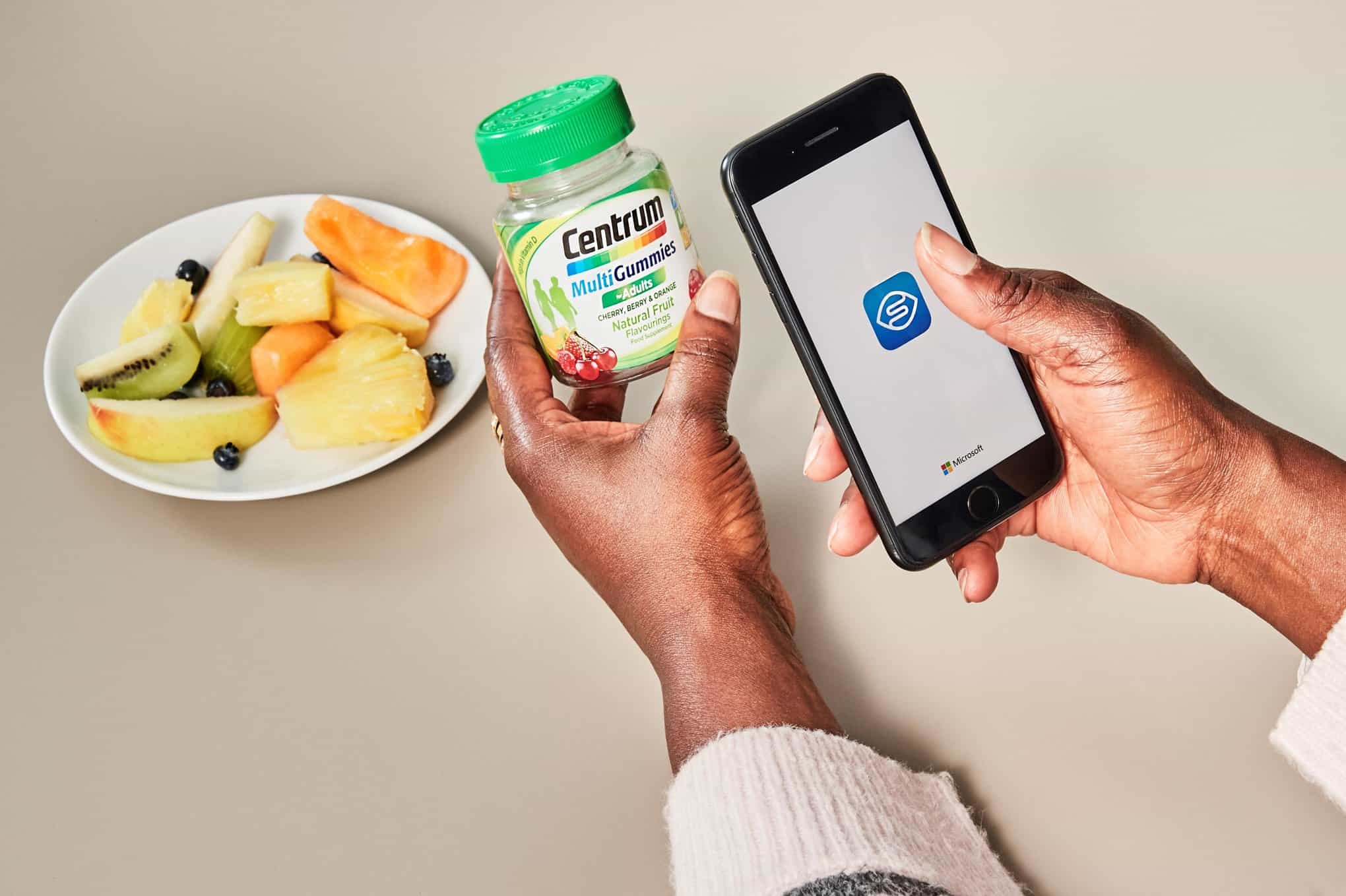
The Seeing AI is app is one of many sight substitution tools available (image: Microsoft)
More than 80 per cent of the information we receive from the world around us comes from our sense of sight. Even if our vision is impaired, it often remains our dominant sense.
Utilising different sight substitution methods for different tasks that prove difficult is one way for patients to make the most use of their residual vision. For example, a visually impaired person may choose to read the newspaper using a magnifier, but listen to a novel in audio format.
Many sight substitution tools use sound to help people with low vision carry on with everyday tasks. These range from liquid level indicators which beep to prevent cups being over-filled, to talking books and newspapers, microwaves, clocks, watches and many more. There are also devices that convert text from print to audio, similar to a large pen.
Some tools operate through the sense of touch, such as games with tactile counters and boards, and bump-ons which are small, raised dots used to mark dials on appliances. Braille, of course, also uses touch – although it is not widely used.
Other helpful solutions
As mentioned in a previous instalment of this series, reading with a magnifier for any length of time can be awkward and tiring. A clipboard or reading stand to support the text being read is helpful, as a normal posture can be maintained, rather than having to lean over a table.
It is also possible to get a double-ended clamp so that a handheld magnifier can be converted to a stand magnifier clamped to a table. This enables the visually impaired person to use it hands free when both hands are required, or when they find it hard to hold a magnifier for a long period of time.
Some people may find large print books helpful. These generally have a font size of around N16, and are widely available from public libraries and bookshops. They can also be used with a magnifier when someone struggles with standard size print, although reading speed will be slower as there are not as many words in the field of view at one time.
Books may also be read on a Kindle or similar device, which allows for increasing the font size and adjusting contrast. Large button phones, remote controls, computer keyboards and clocks, watches and other gadgets with large numerals are also available.
A common problem for people with low vision is losing their place when reading. A typoscope is a black plastic reading guide, which has a cut-out section, to reduce glare and the amount of text visible to the reader. This makes it easier to focus on a line of text.
Finally, there are a myriad of smartphone apps that can make life easier for visually impaired people. Most phones have a magnifier, which can help with seeing detail, a torch to use in low light conditions, and a camera which can be used for seeing distance objects such as bus numbers. A photo taken of the distance target can then be enlarged to see the detail.
In addition, there are apps designed specifically for visually impaired people, such as Seeing AI and Be My Eyes. For more information on apps, download the useful resources PDF.
Abi Crutcher is an extended services contact lens optician with a professional certificate in low vision. In addition to working in practice, Abi represents dispensing opticians on her regional optical committee and, through that, on the Welsh Optometric Committee. She represents optometry on her local primary care cluster committee – and is ABDO’s regional lead in Wales as well as the Association’s sustainability lead. For ABDO matters, email acrutcher@abdo.org.uk